


 Cyprus







Cocoa has a long tradition in Costa Rica. For two millennia, this tropical fruit has been deeply rooted here. It ripens patiently, in harmony with the principles of indigenous cultures. For a long time, we searched for cocoa beans that would meet our quality standards. We found them with the Bribri. To this day, they cultivate cocoa just as their ancestors did. That is exactly what makes it so valuable to us.
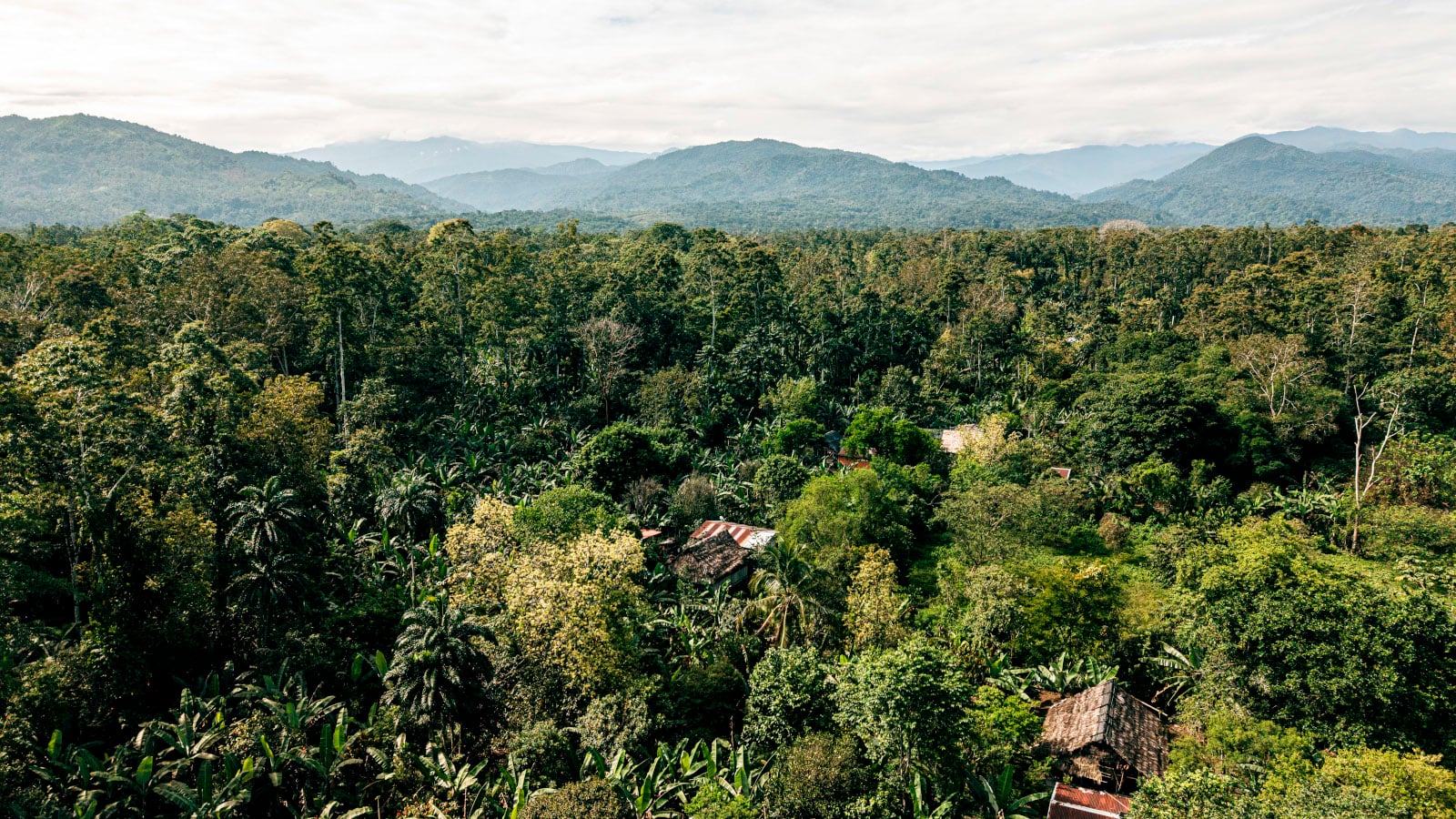
Lush green. Clay-rich, ochre-yellow earth. All around us, a many-voiced tapestry of sounds made up of birds, insects, and the snorting engine of our jeep. We have been traveling since the early morning hours. The winding tracks are drawing us ever deeper into the rainforest that stretches east of the Cordillera de Talamanca all the way to the sea. We are searching. It must be somewhere here – the land of the Bribri. But where? Another burst of tropical rain. Then at last, we come upon a clearing.
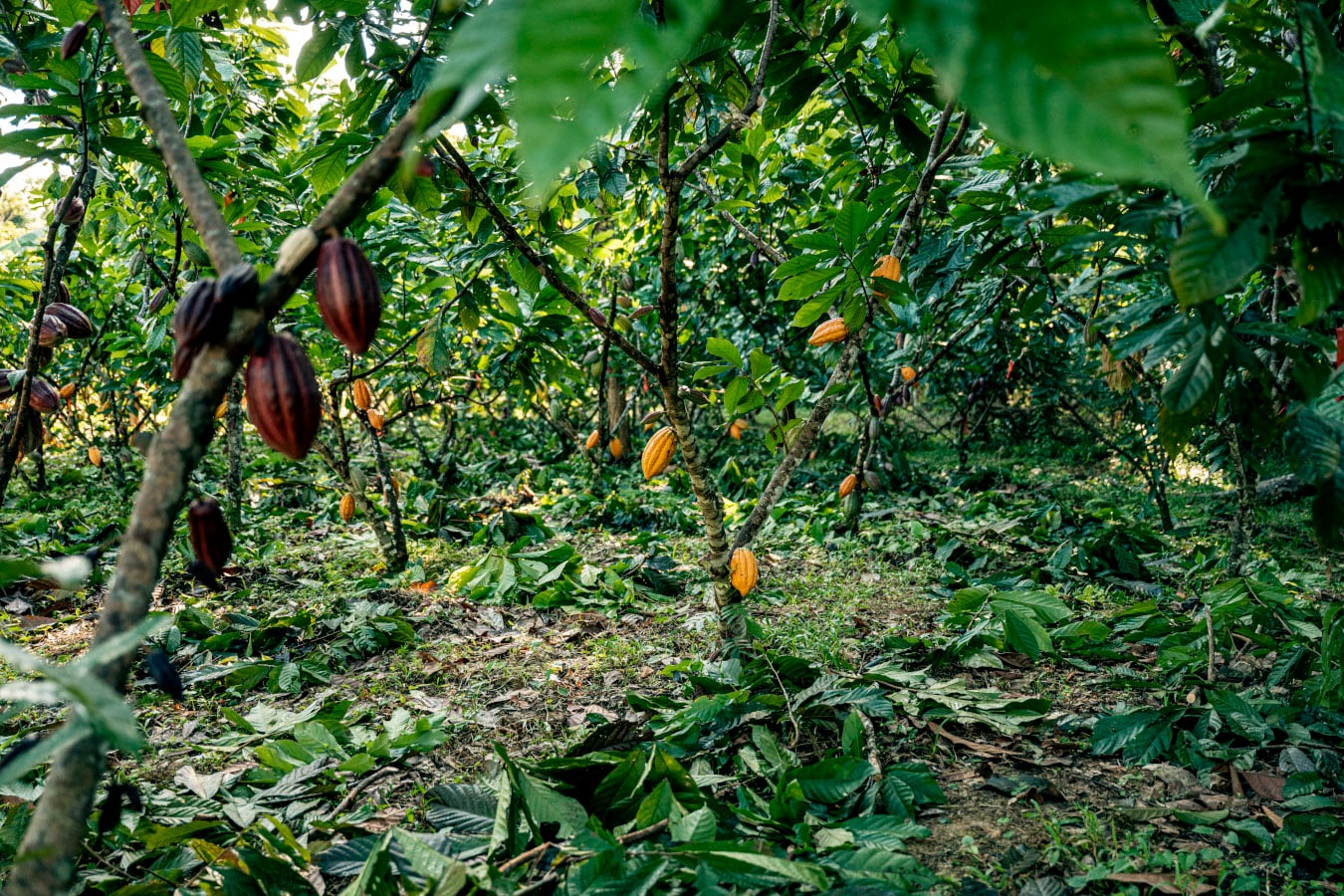
This is where we get out. Soaked through and drenched in sweat. Diane, our interpreter, is already waiting for us. It is mid-January – peak harvest season in Costa Rica. Our eyes wander across the landscape. Beneath the evergreen trees and shrubs, the first cocoa pods come into view. Yellow, red, and violet, they glow toward us. We wanted to learn more about this mysterious, high-quality cocoa. That is why we set out on this journey.
Diane introduces us to Viviana, an indigenous farmer. She belongs to the long-established Bribri community, who still live in the reserve and cultivate this very cocoa. It is a blend of Trinitario, Catie, and Forastero varieties – a distinctive, resilient mix. A cocoa made for this terroir. Viviana inherited her part of the forest from her father 25 years ago. Today, she lives on the farm with her two daughters. She grows medicinal herbs, bananas, and guavas. But cocoa holds the highest importance for her. Naturally, we are very pleased to hear that. Cocoa is the most important ingredient for Läderach. It plays a decisive role in the aromas and taste of our fresh chocolates.
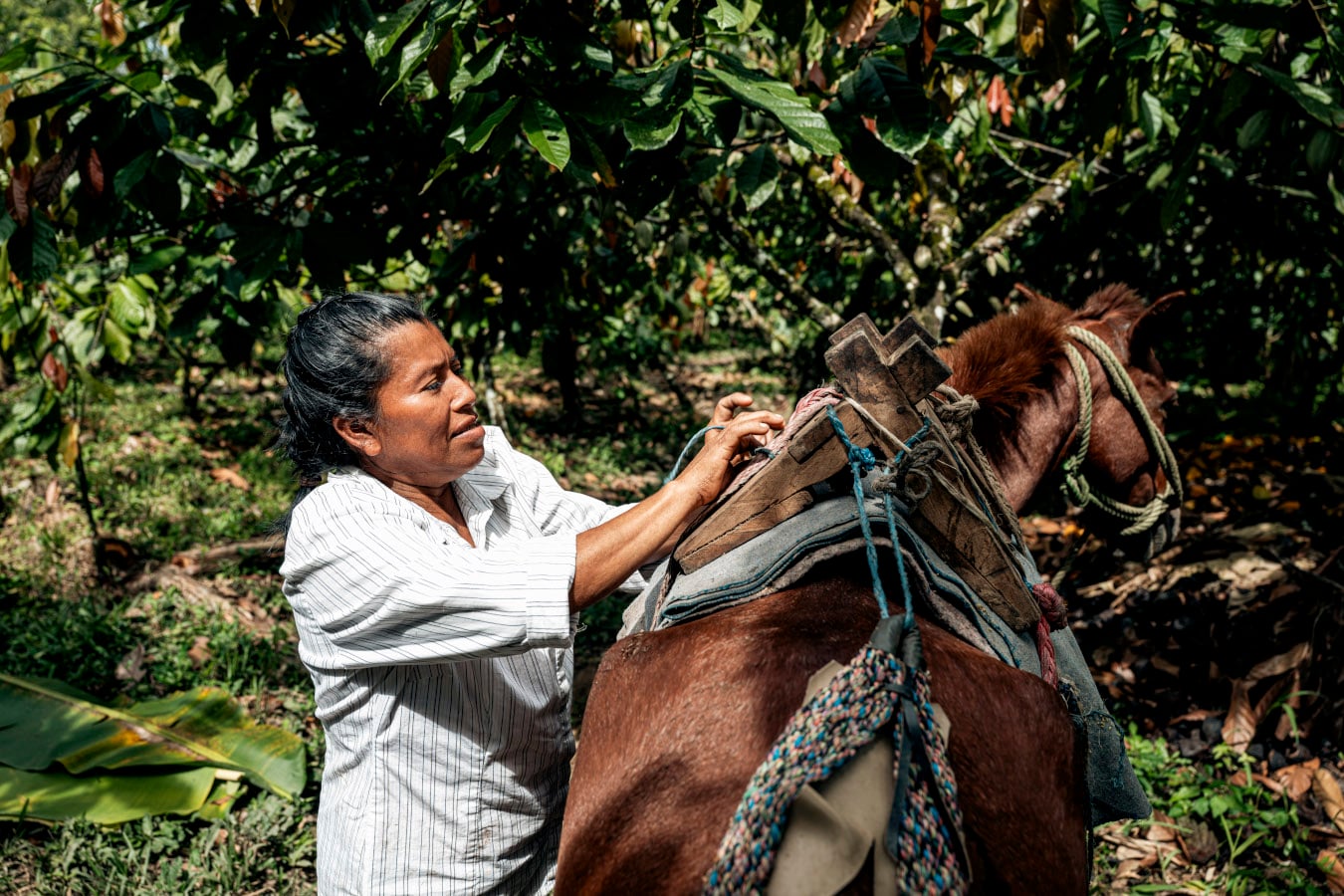
I keep this forest fresh and natural, using only my machete.
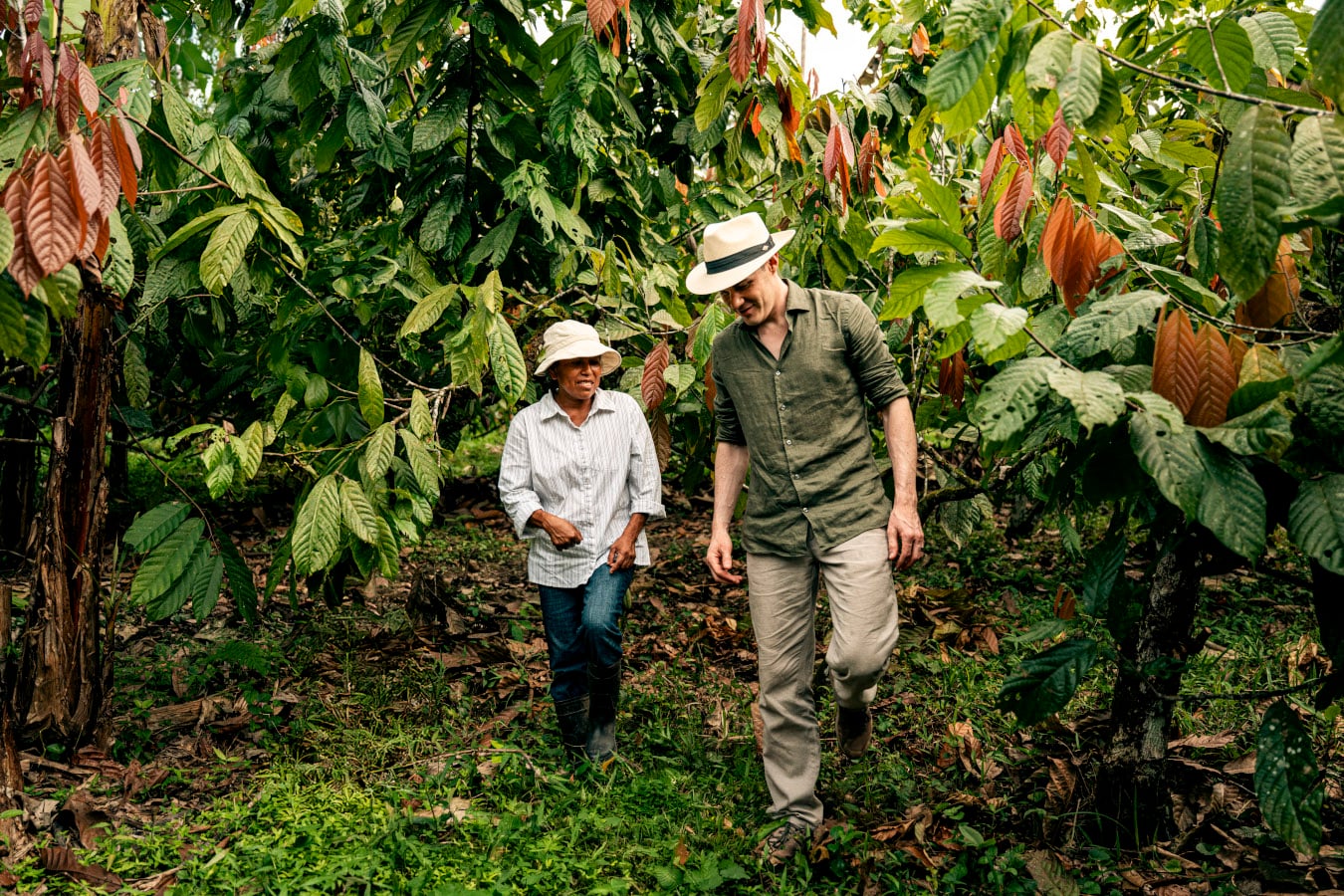
After a brief conversation, the moment has finally come – she takes us to her cocoa trees. The forest smells fresh. We can feel it breathing. We place our feet carefully. The ground is completely covered in leaves. Viviana explains that the leaves serve as natural fertilizer. When we reach a banana plant, she pauses for a moment and uses her machete to cut off a large leaf. The cocoa trees beneath it need some light, but not too much, she says. What matters is a good balance between warmth and shade.
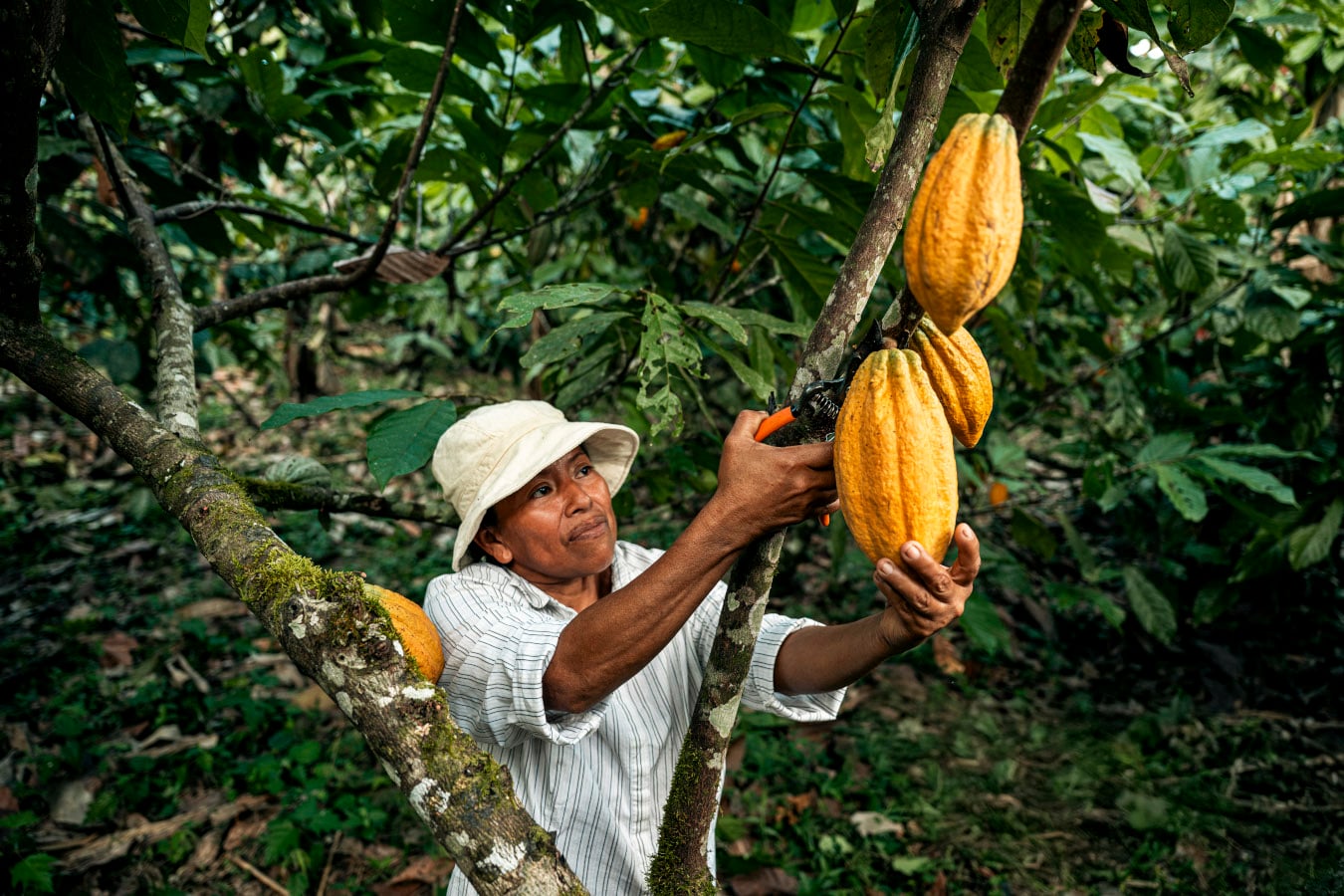
During harvest season, she looks for ripe cocoa pods every day. She recognizes them immediately by their color and the shine of their surface. At the very first tree, she takes her shears and cuts a few pods from the trunk. Very carefully. If she injures the trunk, fewer blossoms will grow back. And that means the harvest in the coming years will be smaller.
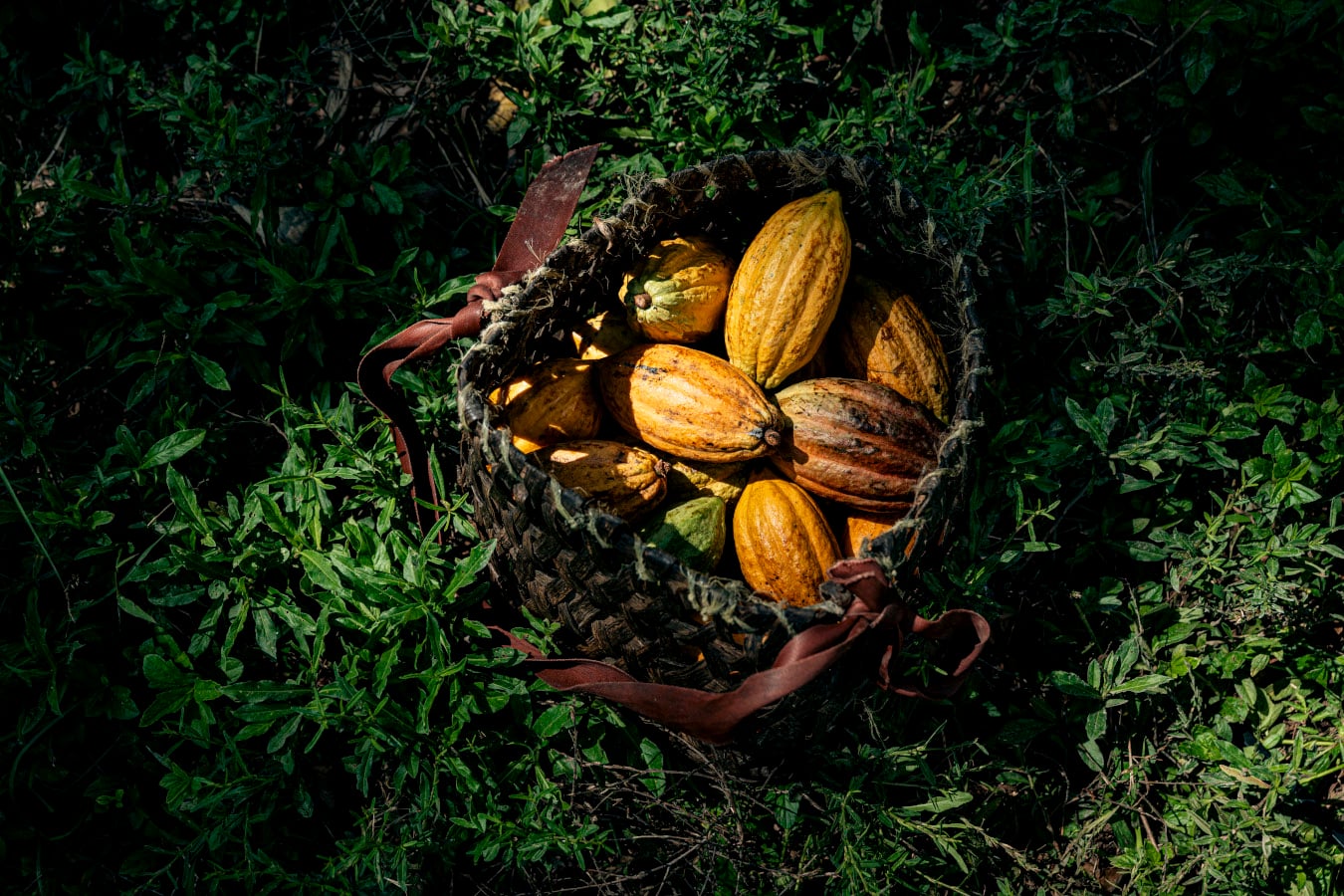
To secure her yield and meet the growing demand for high-quality cocoa, Viviana visits the local nursery at regular intervals. It was established by Läderach together with a partner. Here, seedlings are carefully cultivated by hand and distributed to cocoa farmers. This helps preserve and expand the stock.
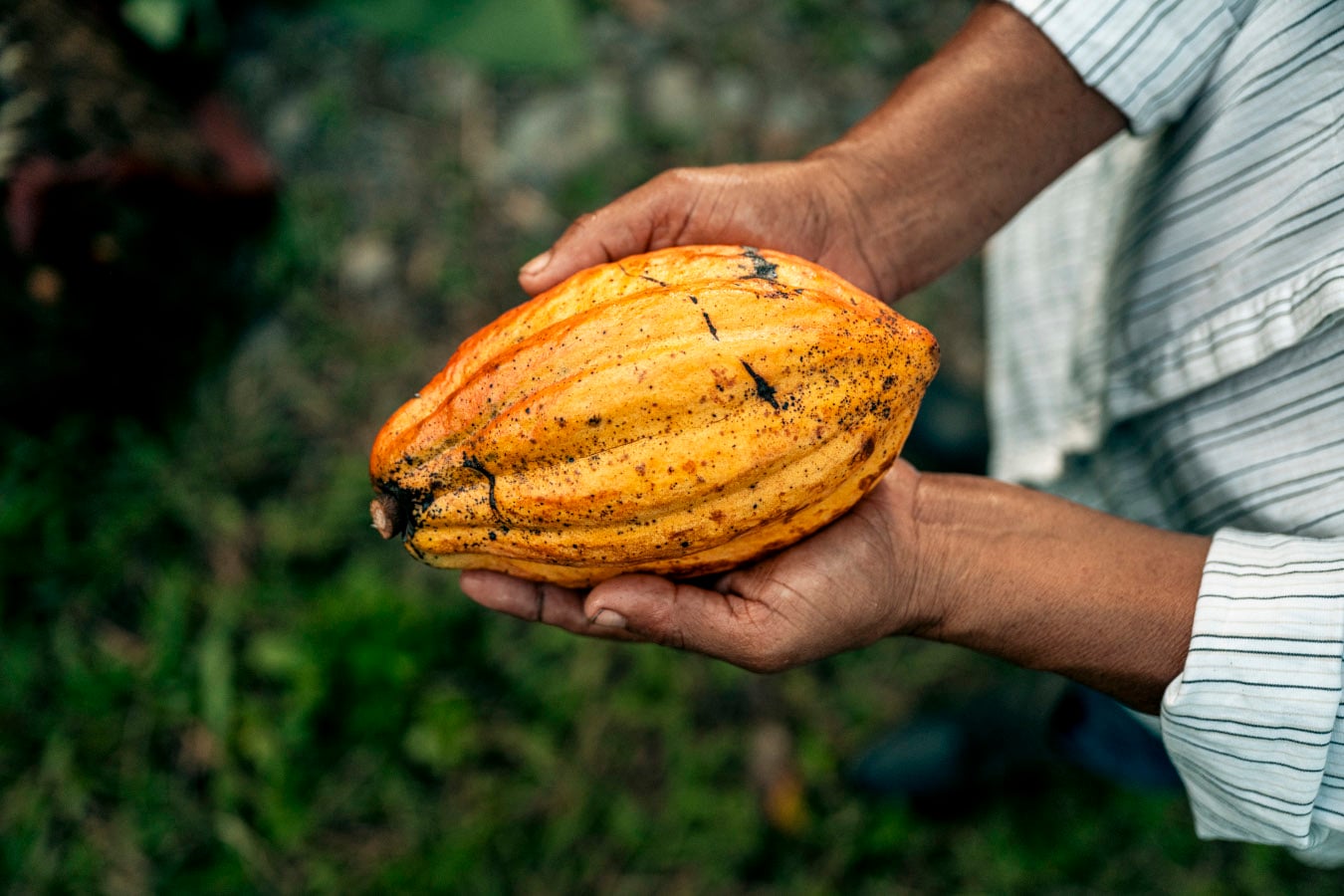
The harvest is done by hand. We take our time. Every cocoa pod is cut individually.
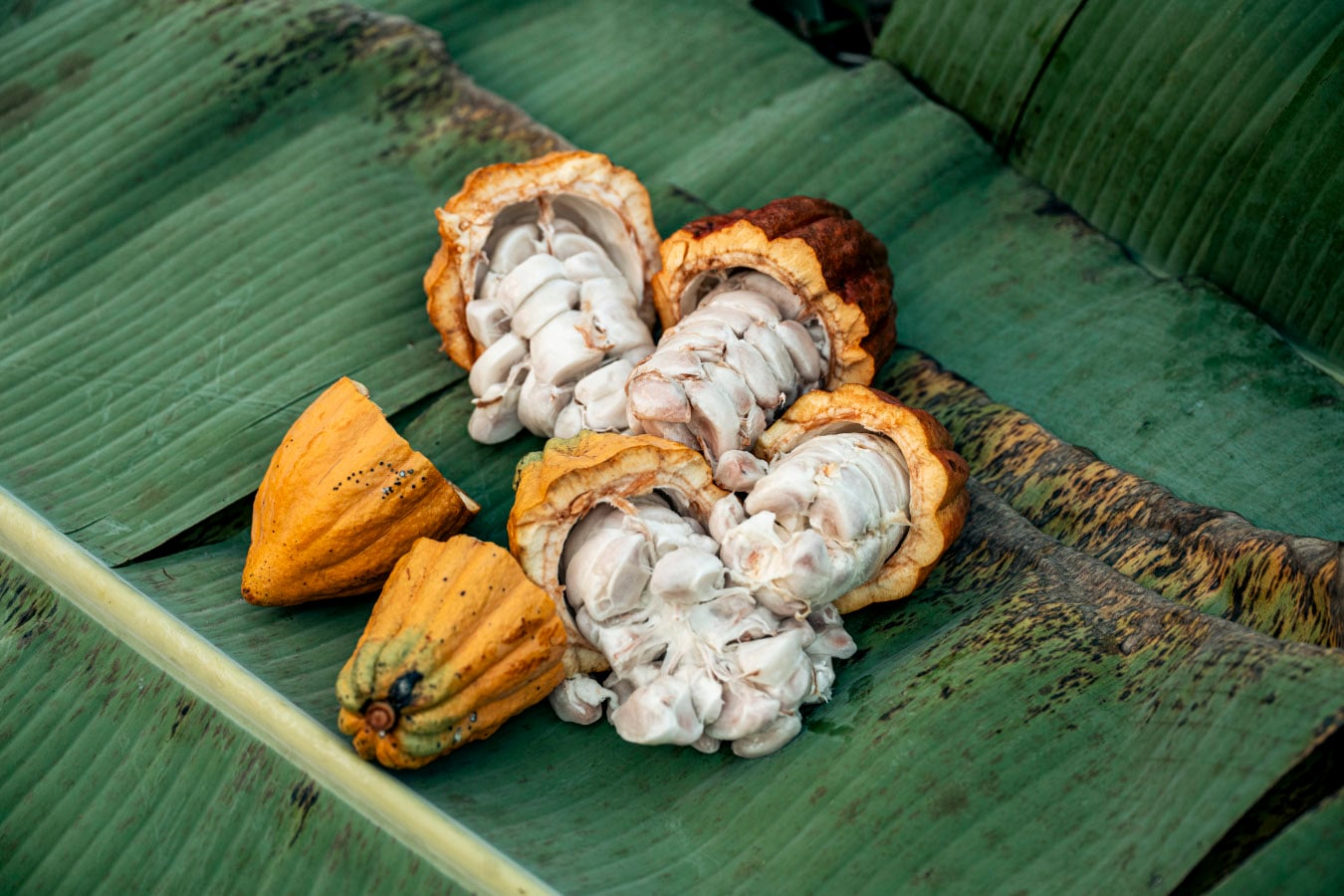
After the harvest, the cocoa pods are opened with a machete. The fresh cocoa seeds are still surrounded by white pulp and give off a fruity, sweet scent. The seeds are quickly packed into sacks and brought to the roadside. Our business partner is already waiting there. He weighs the goods and pays Viviana in cash. For the head of the family, the money is important. It helps her buy the few things she cannot produce herself. In this way, she can improve her family’s standard of living. The farmer is happy. Today’s harvest was a good one.
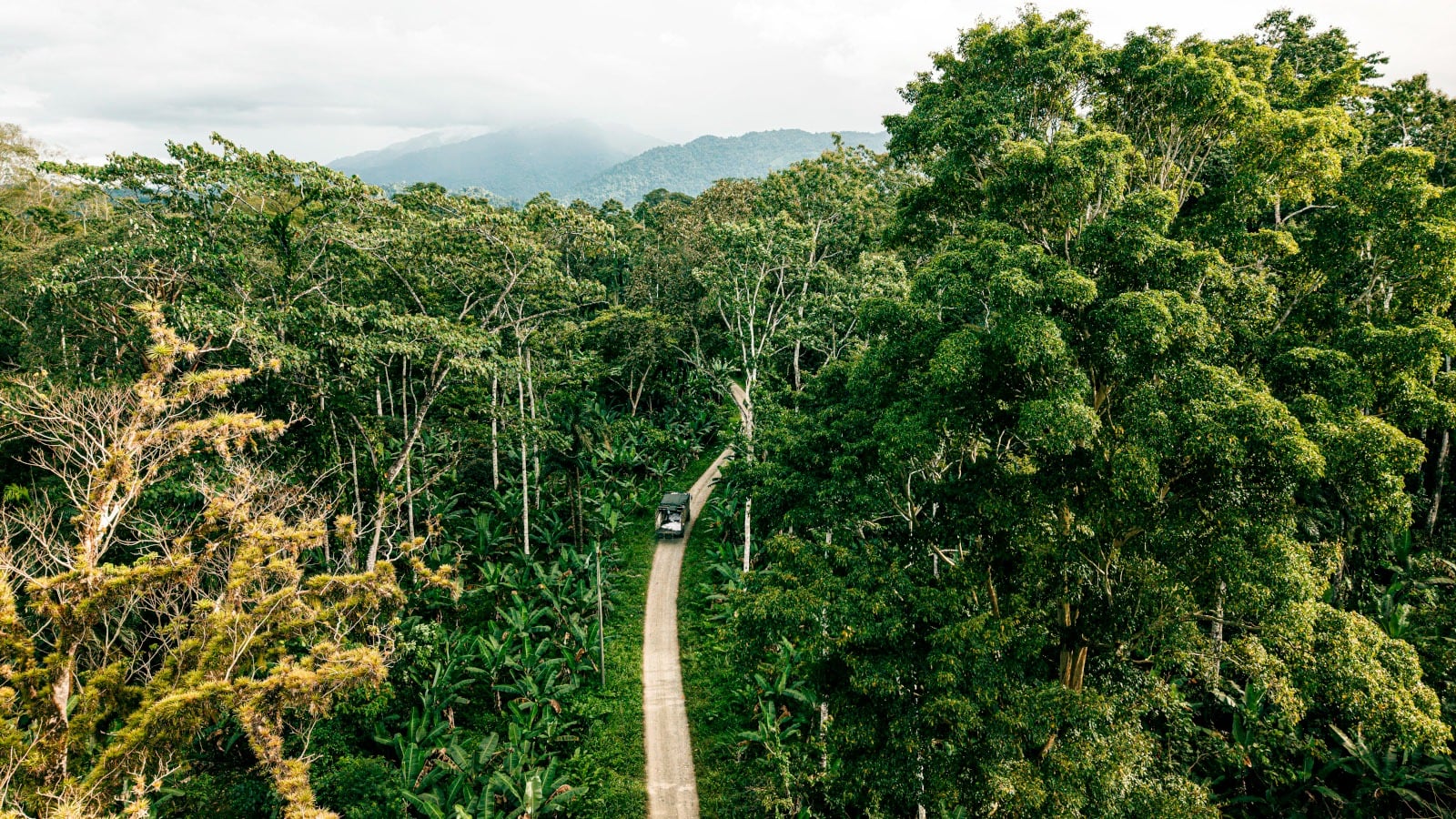
As she waves goodbye, we set off with the cocoa on the second part of our journey. Along unpaved forest tracks, we move at walking pace toward the river. There, strong shoulders lift the heavy sacks filled with moist cocoa seeds onto longboats. Then we cross the water. After a short rest, we continue onward, navigating the final miles.
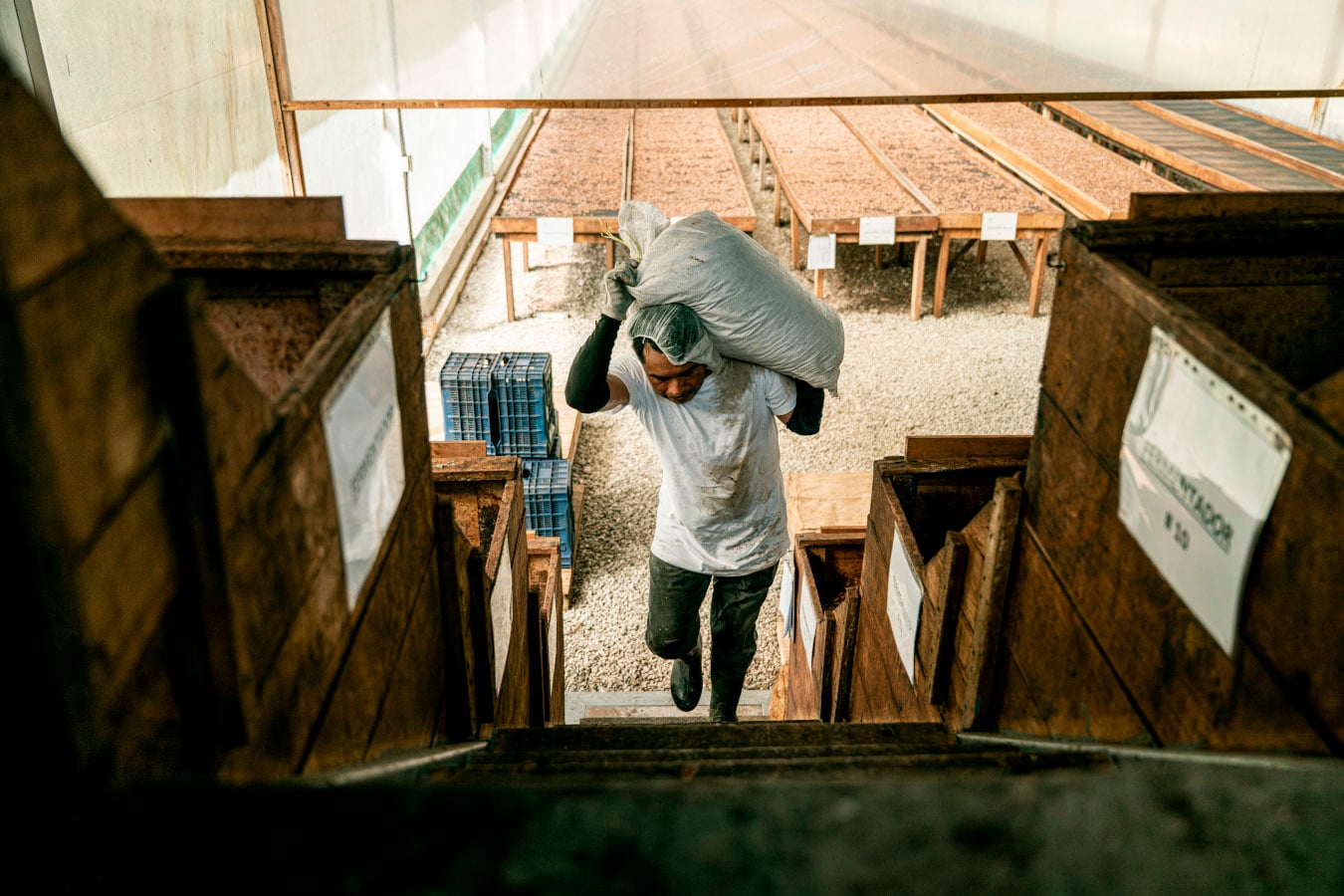
Once we arrive in the village, we enter a small hall. At once, countless aromas surround us, each one difficult to define on its own. But one thing is certain: it does not smell like chocolate here. Edwin welcomes us. He explains the processes. As soon as fresh cocoa arrives, the cocoa seeds are placed into fermentation. Over the course of a few days, they move from the top wooden box to the bottom one. As the sugar contained in the white pulp reacts within these cascades, the temperature rises to around 50 degrees Celsius. The embryos die and bitter compounds are reduced. These complex biochemical processes give the cocoa its later, characteristic flavor. Little by little, the cocoa seeds turn into violet-brown cocoa beans. Many years of experience, along with a willingness to experiment, are needed to bring out the very best in the seeds.
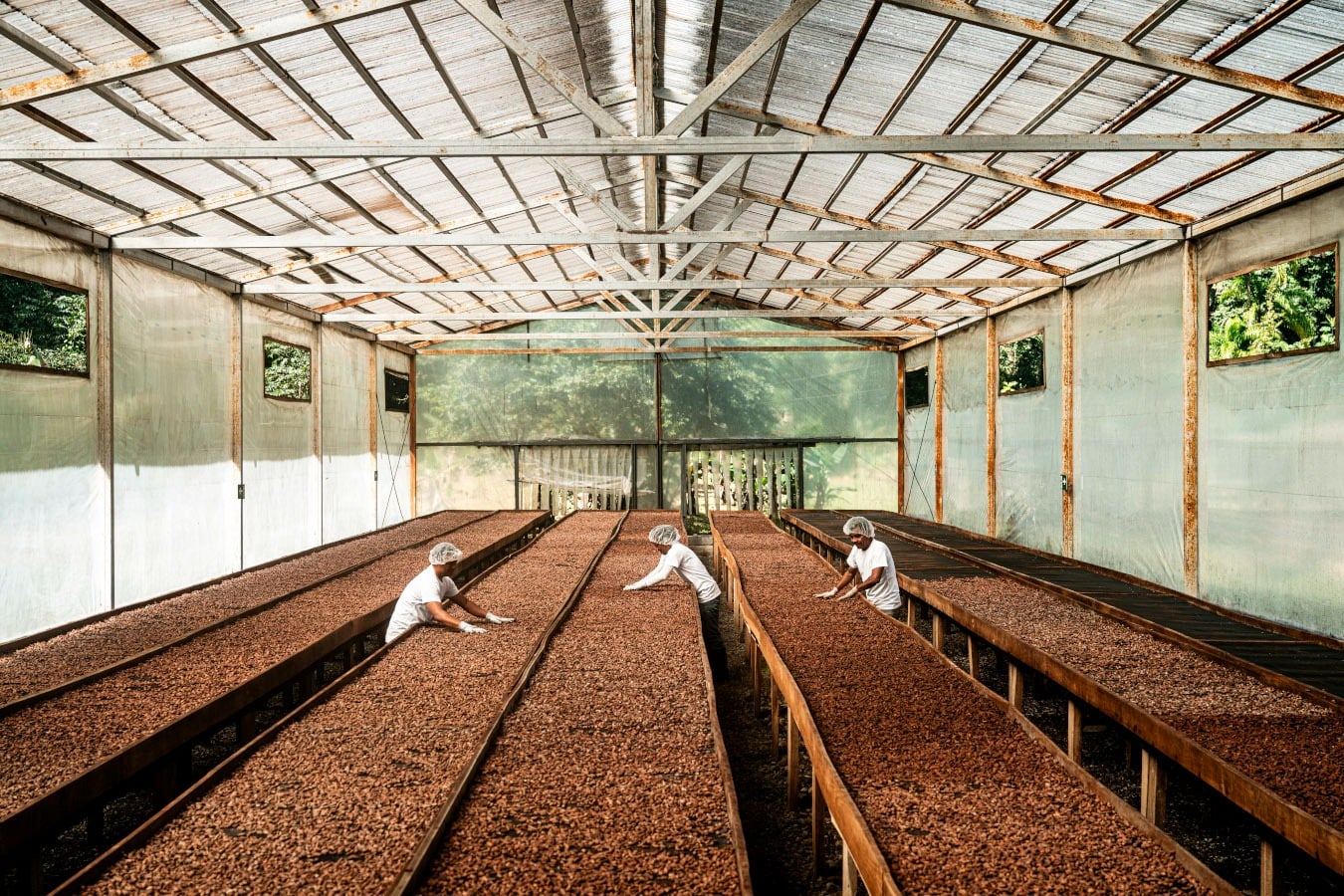
Afterwards, workers spread the cocoa beans out on wooden tables. Here, they are turned several times a day until they are dry enough to transport to Europe. To ensure this, experts check the residual moisture. Between 5% and 7% is ideal. That is what keeps them shelf-stable. Defective beans are separated out. Only the good, high-quality beans are filled into the prepared jute sacks and stored in a climate-controlled container until shipment.
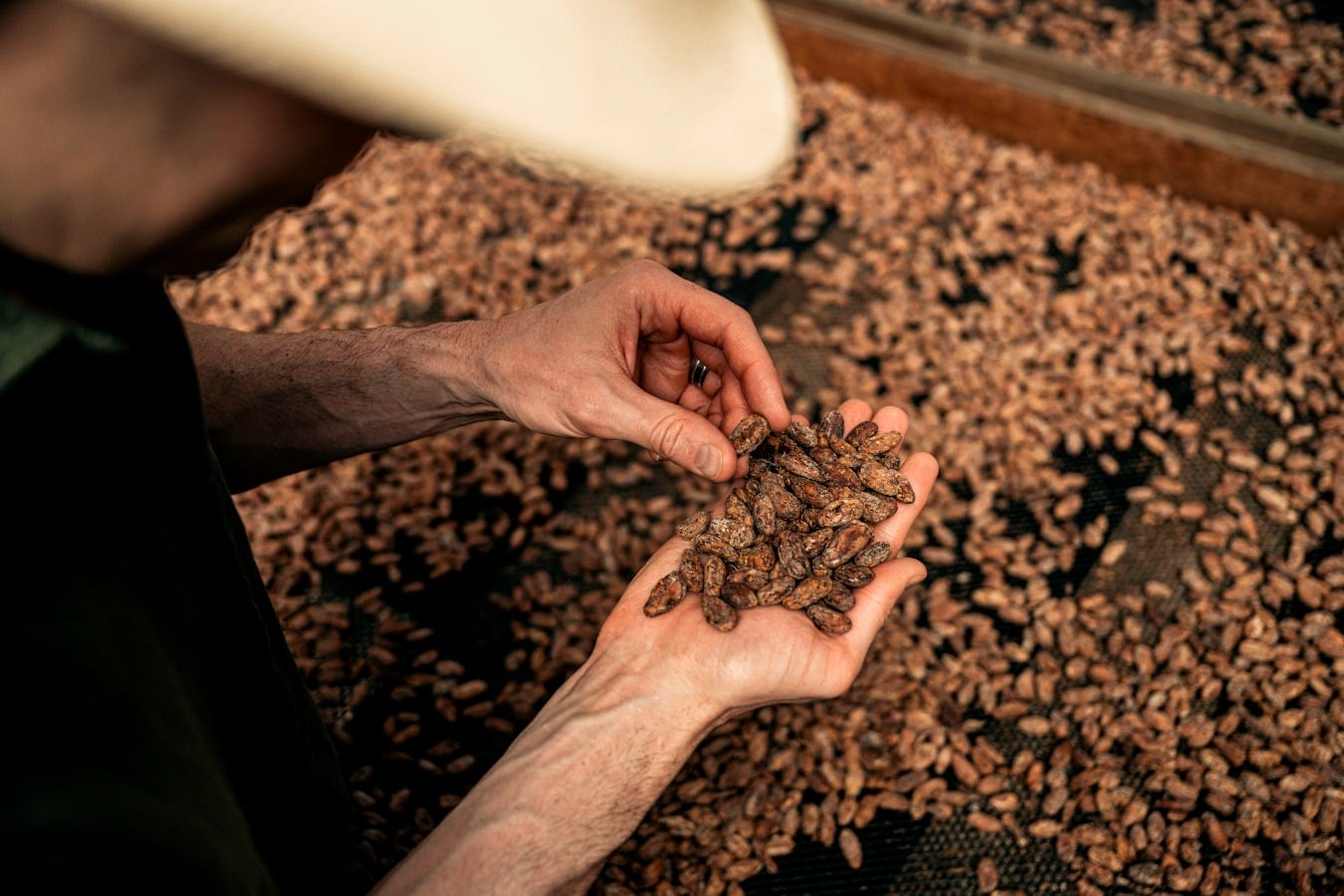
It is fascinating to watch these experienced producers at work. Every movement is precise. It has to be. Otherwise, the quality of the cocoa suffers. And that must not happen under any circumstances. Because then it would no longer be good enough for our fresh chocolate.
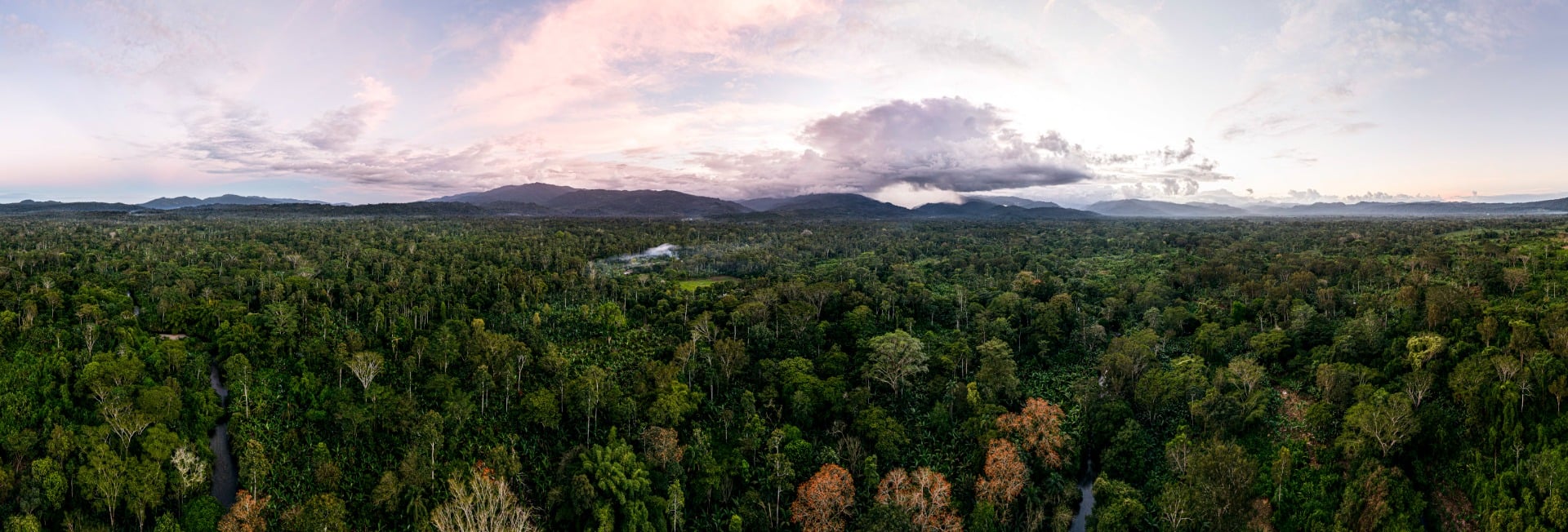
This forest. This land of the Bribri. This is where cocoa begins. Its home.
It is late afternoon. Time for us to think about the journey home. Among the Bribri, life continues at its own pace. Peacefully. Unhurriedly. In the coming weeks, Viviana will continue cutting ripe cocoa pods from the trunks and preparing them for further processing. Just as her ancestors did. And their ancestors before them. Perhaps now and then she will still enjoy the fresh, sweet pulp, just as she did when her father first introduced her to the secrets of cocoa cultivation. We could well understand why.
From origin to indulgence
We have been sharing our passion for fresh chocolate for generations. Discover more about our history, our innovations, and the authentic artisanal skills of our chocolatiers.
About us
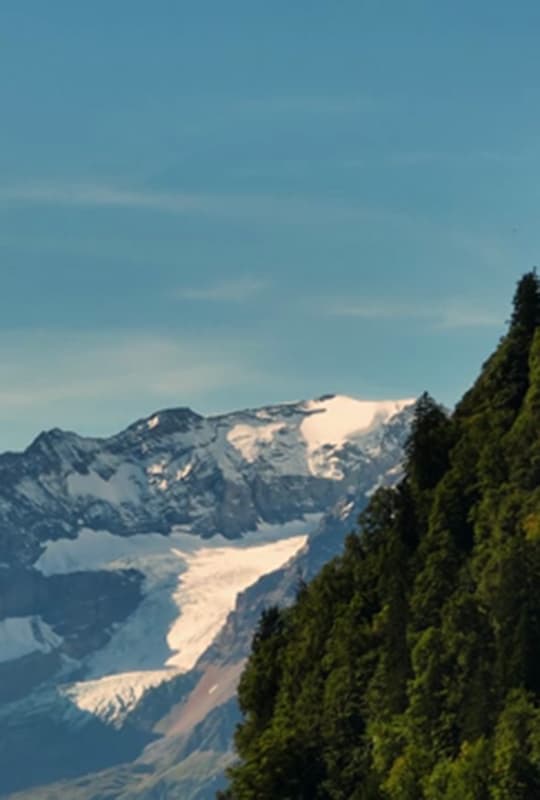
The Swiss Alps are our home, and we invite the world to indulge in our culinary heritage. Find out where we come from and why innovation is so important to us. And get to know the people behind Läderach.
Learn more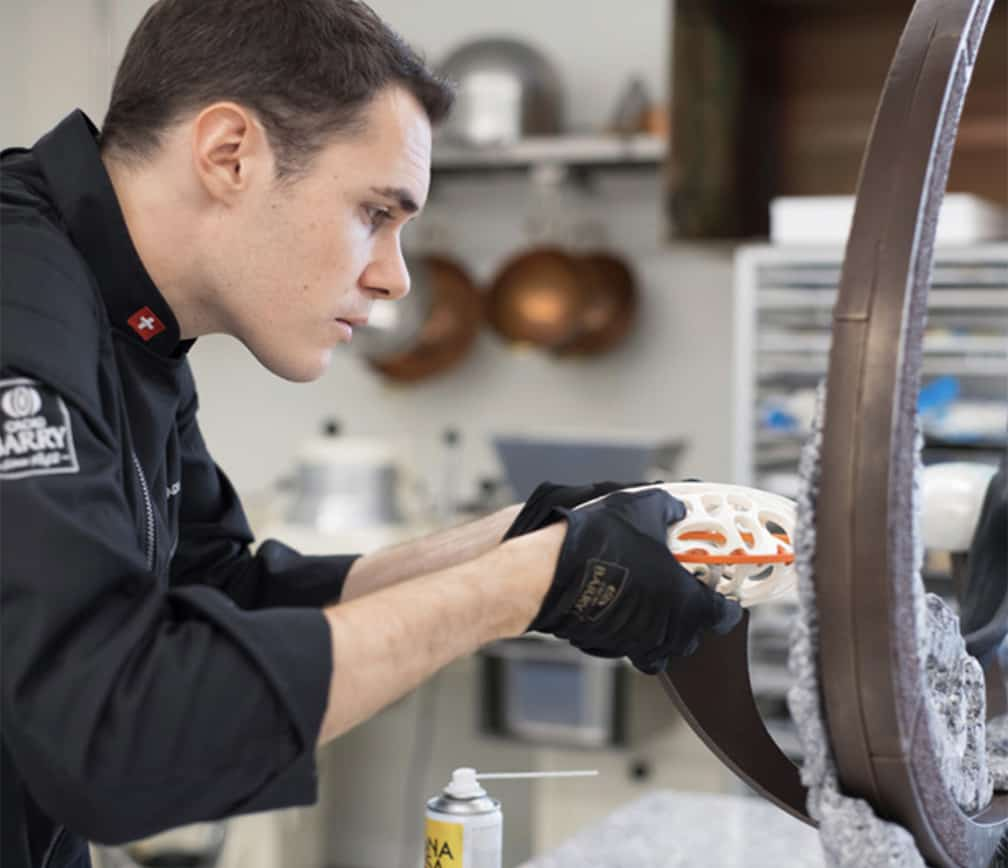
World Chocolate Master
Elias Läderach is the only Swiss chocolatier to have earned the title “World Chocolate Master.” Experience his award-winning creations and find out more about his latest projects.
Learn more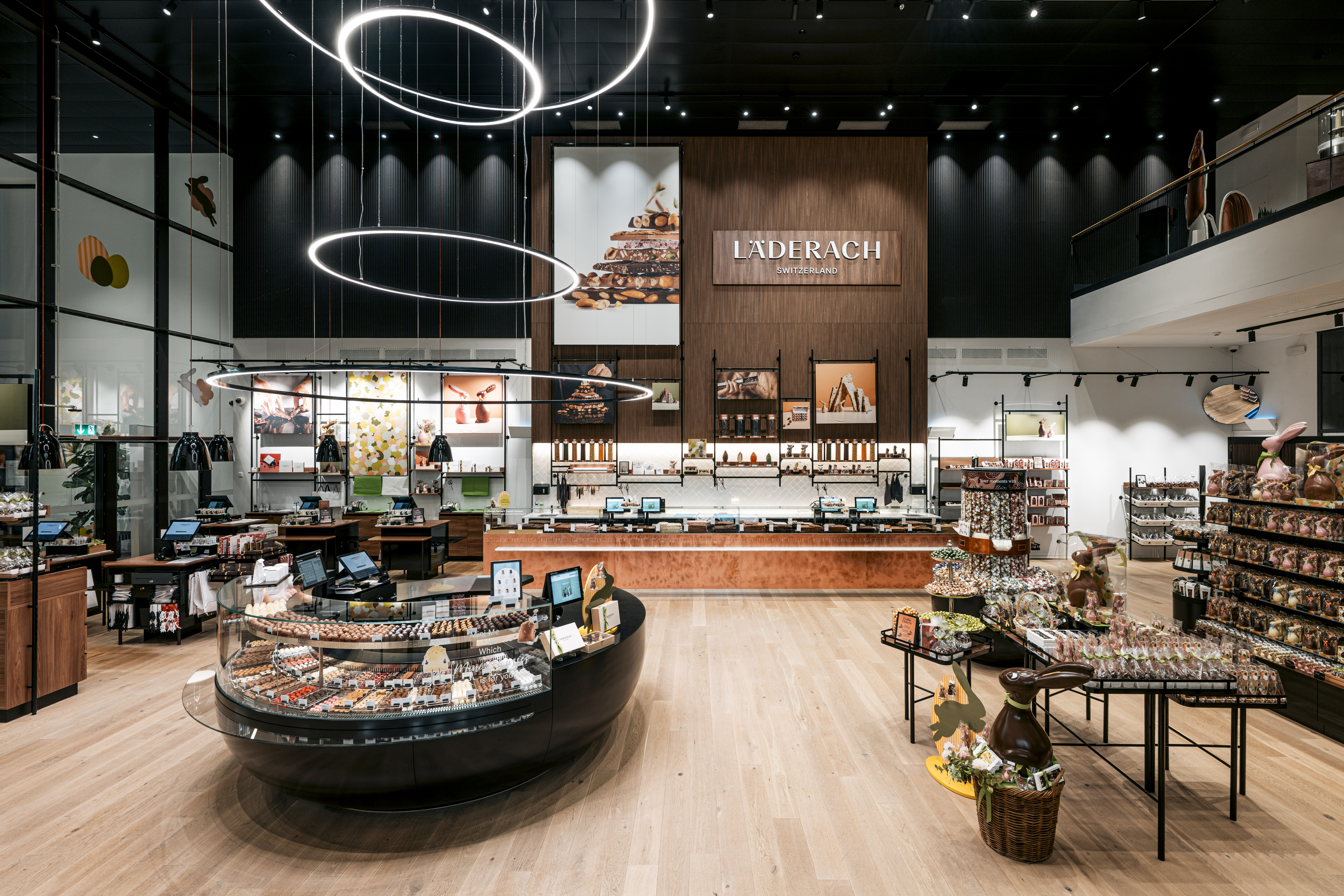
House of Läderach
A chocolate museum, a chocolate studio, chocolate events – the House of Läderach has it all, including a café, of course!. Discover the delights of freshly made chocolate in all of its facets – 364 days a year.
Visit now
Freshness
The exquisite taste of our chocolate creations is an affair of the heart for us. That’s why we make them fresh daily and get them to you as quickly as possible – so you can experience the freshness with all your senses.
Learn more