



Please ensure Javascript is enabled for purposes of website accessibility

Origin

We know the journey our cocoa beans take – from their origins all the way to our chocolateries around the world. Since we believe this is the only way to create the highest-quality chocolate, it is our top priority.

Cocoa origin and cultivation

Join us on a journey to the origins of our chocolate, after which we promise you’ll enjoy every piece that little bit more.

Our most important ingredient

The best cocoa

For the best chocolate, you need the best cocoa – and for that, you need carefully cultivated cocoa trees. To find them, we regularly send our scouts to the rainforests of the cocoa belt. Only here do you find the ideal conditions for growing cocoa: a year-round damp tropical climate, fertile soils, and indirect sunlight. This is because the fruits thrive best in the shade of banana trees, oil palms, or mahogany trees.

Small cultivation areas

Unique terroirs

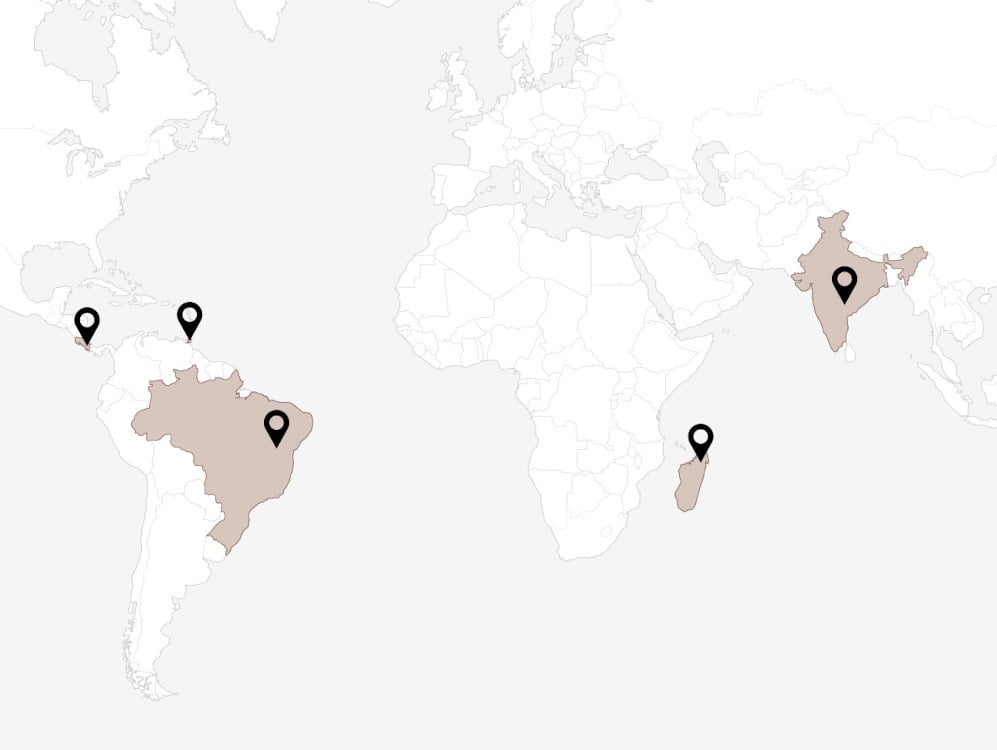
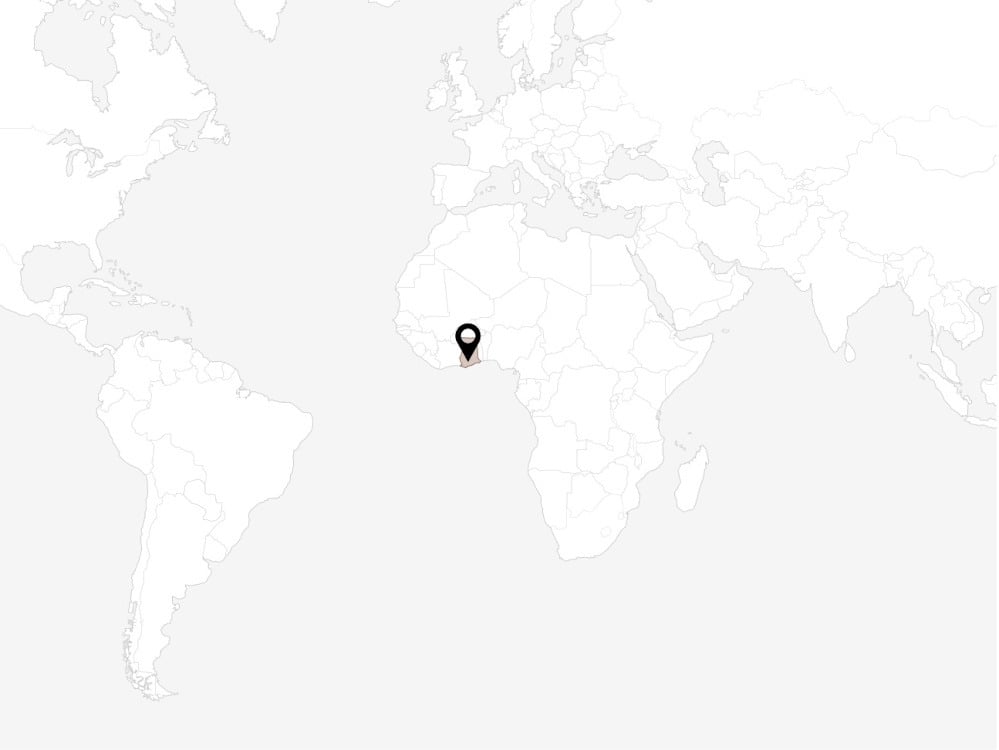
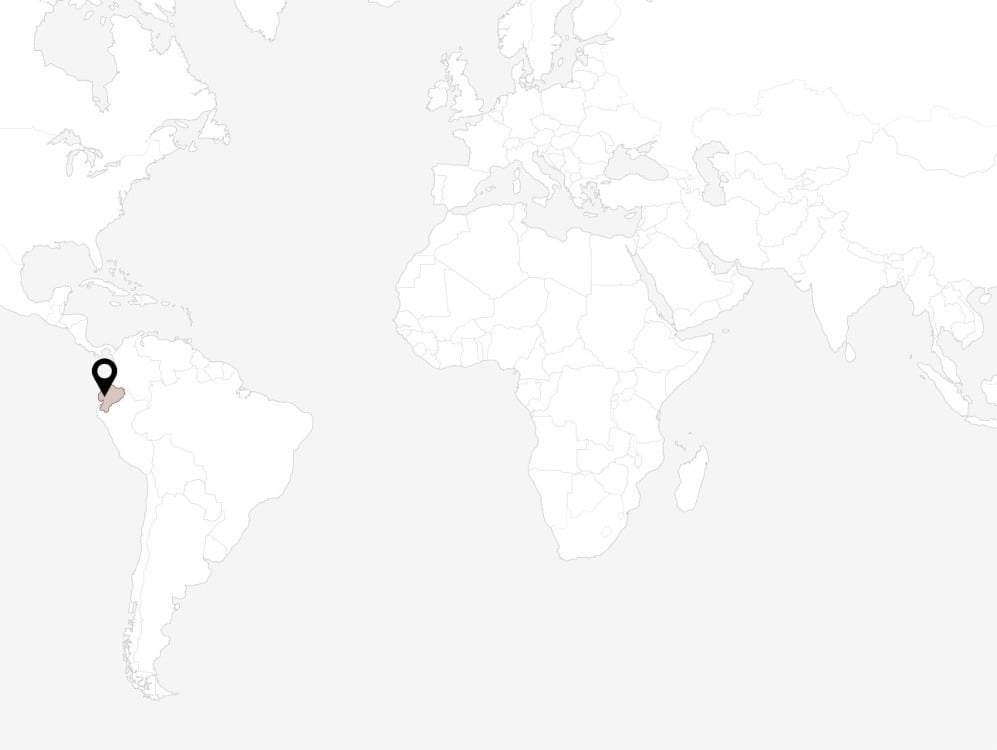
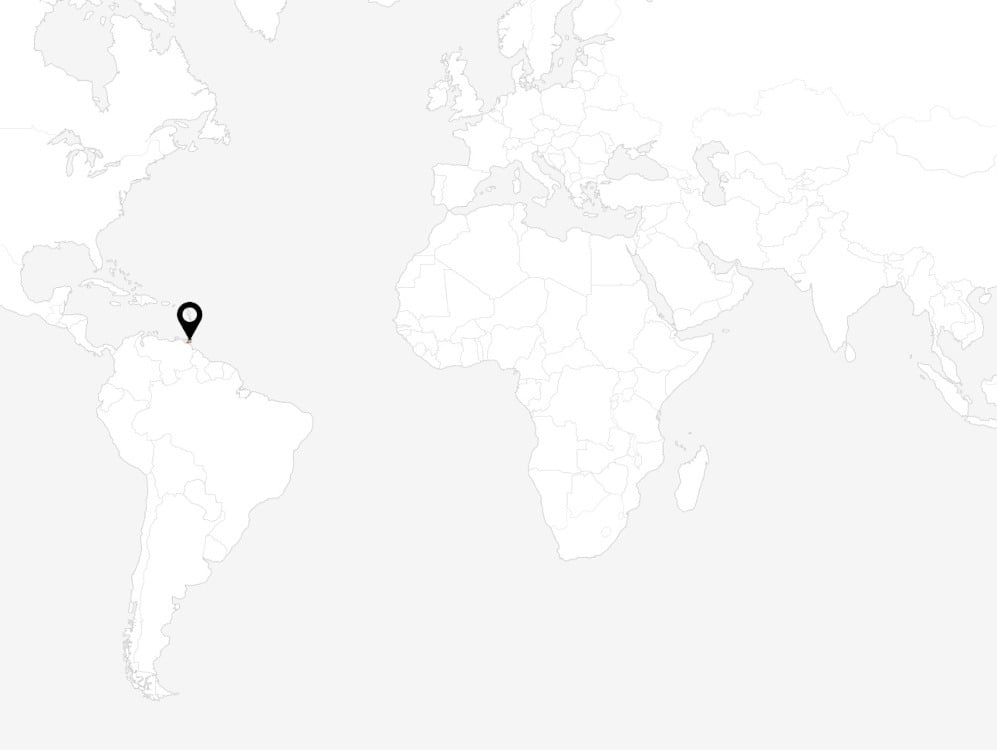
The main countries of origin for our cocoa beans are Costa Rica, Ecuador, Trinidad, Brazil, Ghana, Madagascar and India. After an intensive search, we were able to find local partners there who share our passion for top quality – people who dedicate themselves to the cocoa trees and their fruits on their small plots and farmsteads every day, and families who have passed on their experience and cultivated their estates with unerring devotion for generations.

Cultivated with care

The cocoa fruit

The cocoa tree is a delicate plant. Many trees do not bear fruit in the first few years – it’s only with time that they really blossom. But not every blossom becomes a fruit. For every 10 000 blossoms, only 50 fruits develop that we can use for our chocolate. The ripe cocoa fruits are harvested almost six months later – or longer, depending on where and how they are cultivated.

Cocoa processing

Processing cocoa is complex – it takes a total of four steps to turn the colorful fruits into dry beans. Bagged up in jute sacks, the precious cargo is then transported to our cocoa depot in Switzerland in the most resource-efficient way possible.

Harvesting

A blaze of colors

The smallholders harvest their cocoa fruits two to three times a year. Thanks to years of experience, their trained eyes can tell exactly when the fruit is ripe based on size and color, but the most important thing of all is the fruit’s slightly shiny surface. If the quality is right, workers carefully separate the fruits from the tree using a machete or pruning shears.

Harvesting

Every fruit is precious

Even on small cocoa farms the size of a football field, the harvest takes several weeks. Cutting cocoa fruits from the trees is still done entirely by hand. The trunk of the cocoa tree must not be damaged. On average, one tree bears around 50 pods per year. That yields enough cocoa for around 10 to 12 bars of dark chocolate.

Opening

Cracking the fruit

After harvesting, the shell of the fresh fruits are opened, usually still whilst on the farm. The roughly 40 cocoa seeds are then removed by hand. They are embedded in a gelatinous white pulp that tastes similar to lychee: slightly tangy, wonderfully fresh and fruity. Very few people would think of chocolate at this stage.

Fermentation

From cocoa seed to bean

Fermentation is crucial to how the chocolate will eventually taste. The moist cocoa seeds are placed into wooden boxes and turned repeatedly to support the biochemical processes. Little by little, the pulp dries out and the seeds begin to ferment. This is a complex process where enzymes influence the aromas, but also the purple or brown coloring – and it’s during this process that the cocoa seeds become cocoa beans.

Fermentation 

The subtle distinctions

In total, fermentation can take anything from two to seven days. During this time, the temperature inside the wooden boxes rises to between 45 to 50 degrees Celsius. Experts continuously monitor the fermentation process and adjust it with precision. At the end of the process, the cocoa beans have to meet all of our sensory and qualitative requirements.

Drying

The finishing touches

Before the cocoa beans make their way to us in Glarus, they are gently dried. This is done the traditional method – on wooden tables in the tropical heat. It takes five to seven days for the moisture content to reach the requisite 7% before being ready to travel. The beans are turned regularly and checked repeatedly until they’re ready and acquire their hallmark bitter cocoa taste and their chocolate-brown color.

Transportation

Destination: Switzerland

After one final on-site quality control check, the cocoa beans are bagged up in jute sacks. After that, it’s off to Europe in a shipping container. On arrival at our small chocolate factory, the beans are examined thoroughly one more time. We pay special attention to the sensory aspects, the fat composition, and the degree of moisture. Only once our laboratory gives the go-ahead can the cocoa beans continue their journey.

Our partners

We have one thing above all else in common with our partners – a passion for the highest quality – so it stands to reason that we’ve developed a few friendships over the years. These are friendships that we're happy to share with you; join us in visiting the farms, groves, and smallholdings.
Background Image M

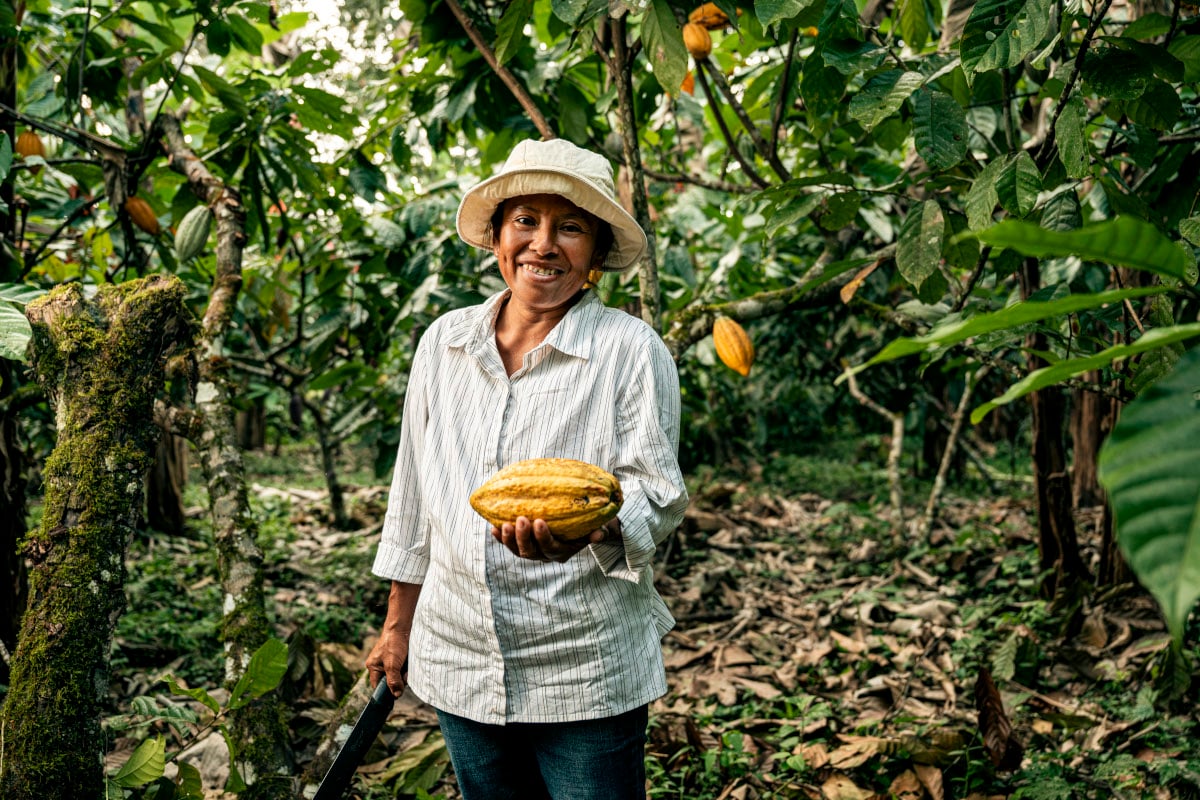
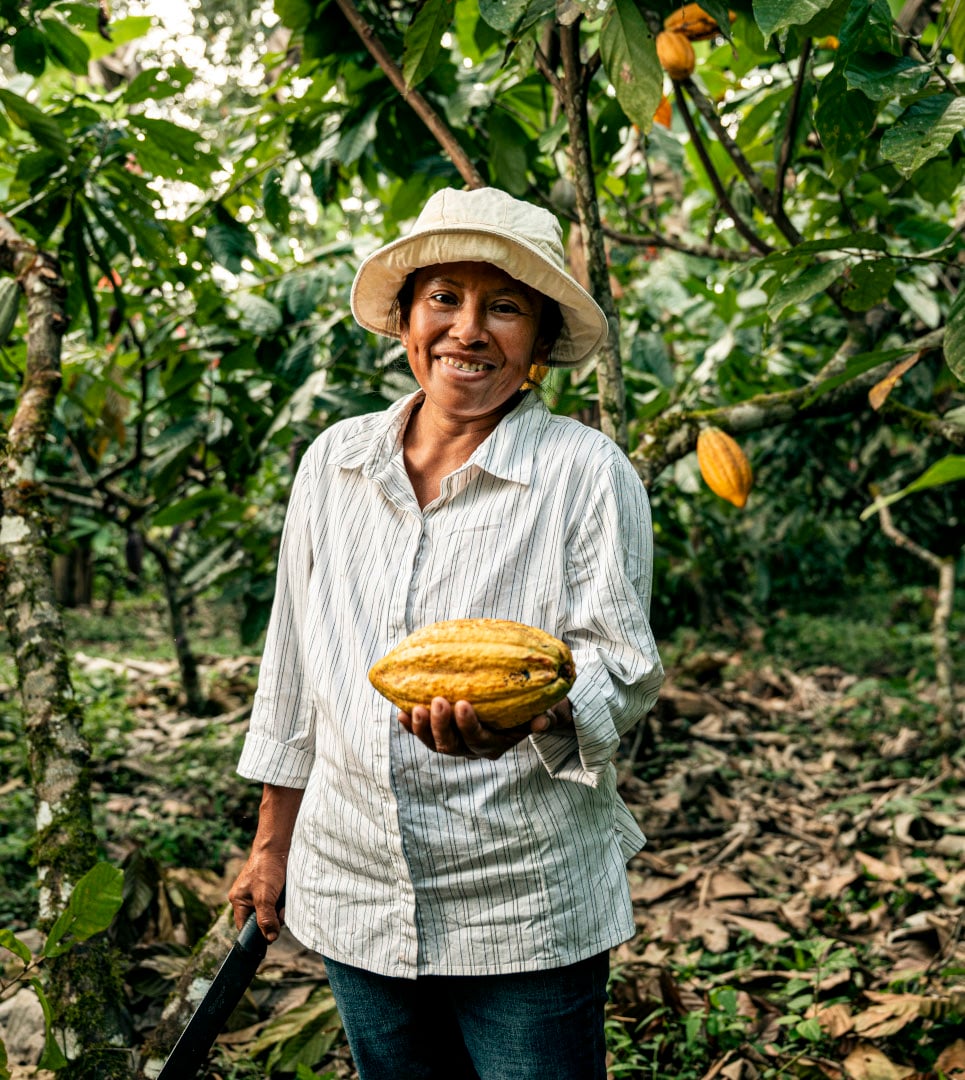
Viviana Rayo Sanchéz – cocoa farmer from Costa Rica

“This forest. This land of the Bribri. This is where cocoa begins. It's home.”

Read the story
 

Background Image M

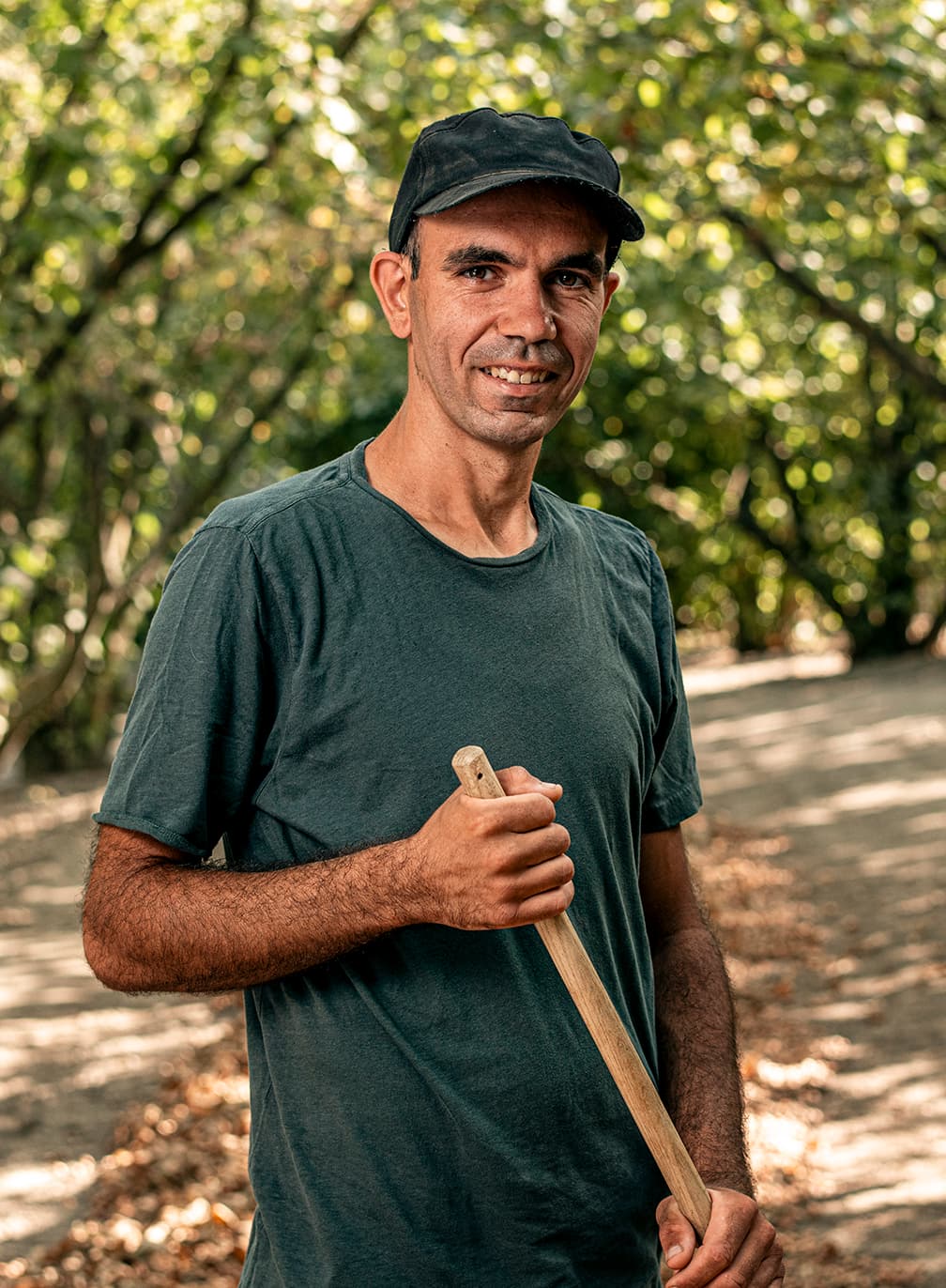
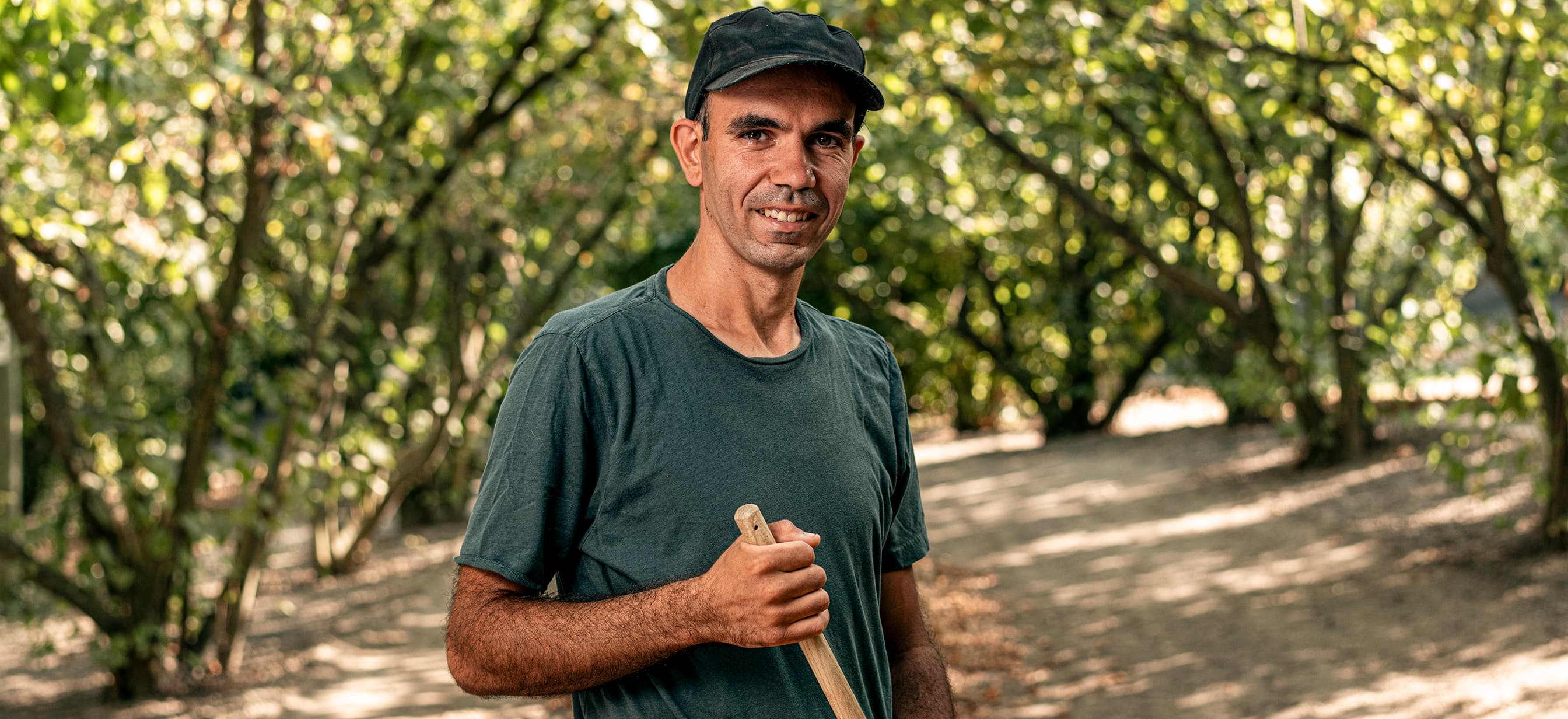
Fabio Francone – hazelnut producer from Piedmont

“They put their full trust in us, even in difficult harvest years.”

Read the story
Background Image M

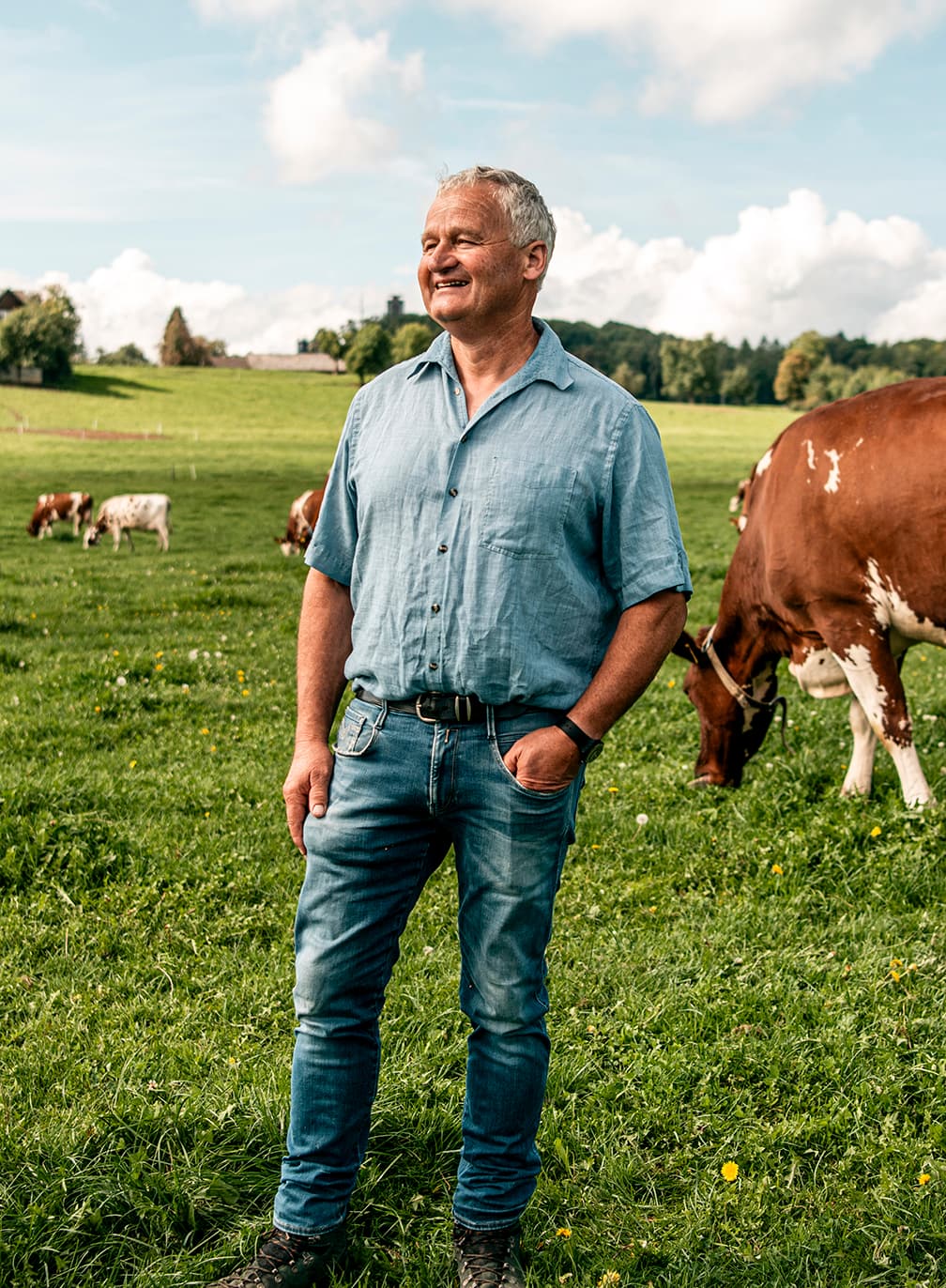
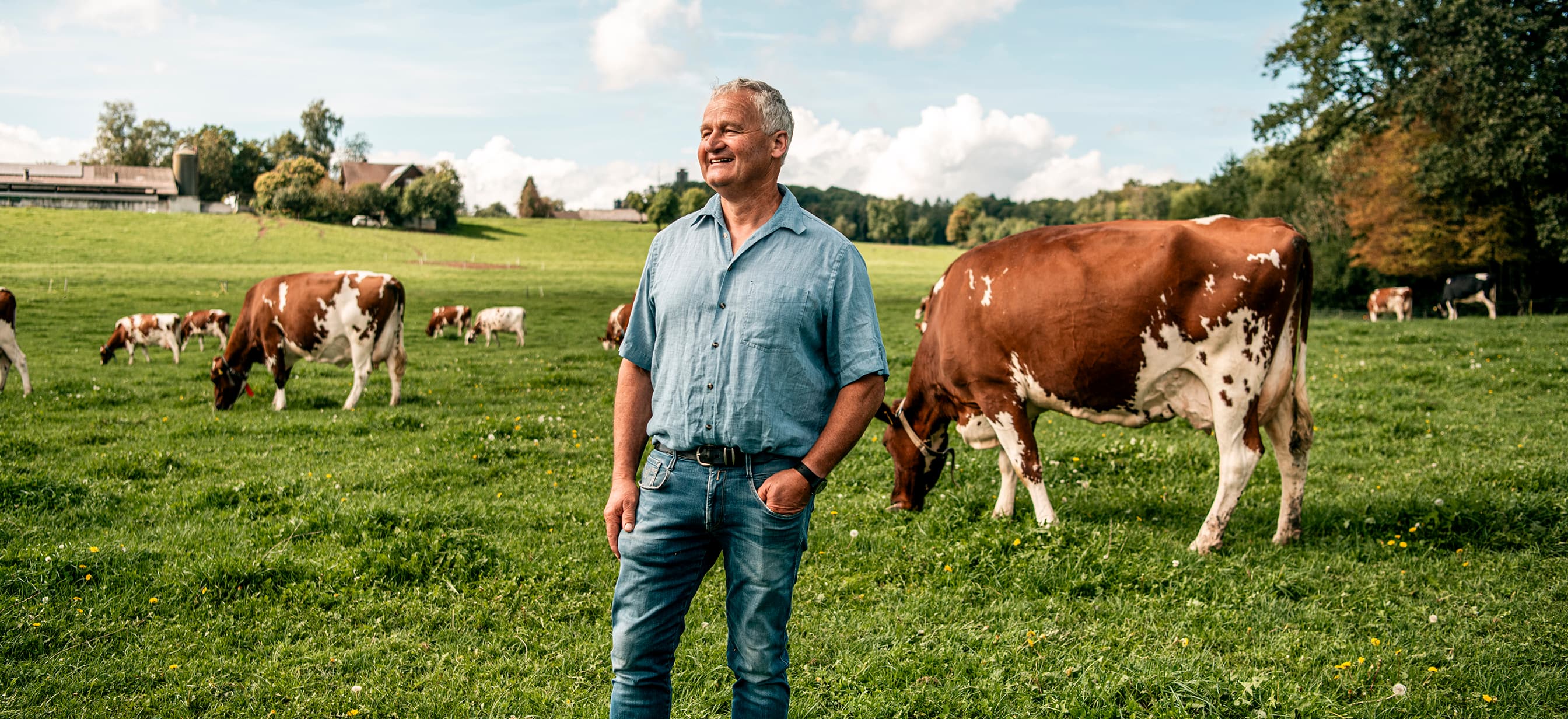
Werner Schenk – dairy farmer from Thurgau

“We also have our cows to thank for how beautiful Switzerland is.”

Read the story

 

Our cocoa varieties

We source our cocoa from a range of countries around the globe – from Costa Rica to Madagascar. Even though all the countries along the cocoa belt have similar climates, the cocoa fruits harvested in each country develops individual and incomparable aromas and flavors.

chevron-down
chevron-up

Criollo

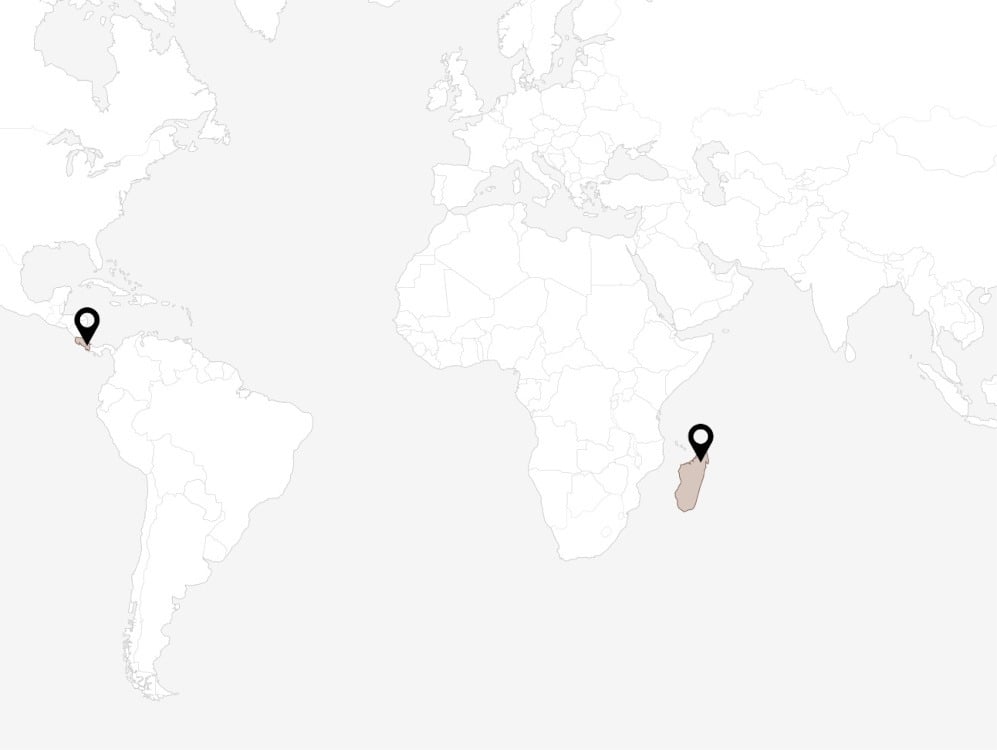
Criollo is often referred to as the queen of cocoa fruits. Due to a low yield, its beans are among the most sought-after in the world. Our Criollos come exclusively from two growing regions: the valley of Sambirano on Madagascar and the area around Upala in Costa Rica, both which offer an ideal environment for luxury cocoa. Gently fermented and dried, Criollo beans give the chocolate an intense cocoa flavor, paired with citrus and fruity berry notes.

chevron-down
chevron-up

Trinitario

Our second luxury cocoa is Trinitario. We source these varieties from the same regions of Madagascar and Costa Rica we use to import Criollo, but also from India, Brazil – and Trinitarios original homeland of Trinidad. Our Trinitario from Trinidad comes from Gran Couva, fermented the traditional way and dried slowly, so that the beans produce an authentic Single Origin chocolate with a rich cocoa flavor and nuances of fine wood. In Brazil, the cocoa farmers use the Cabruca method. They ensure sustainable organic farming in the shade of the rainforest, preserving the natural ecosystem.

chevron-down
chevron-up

Amelonado

Amelonado is one of the most popular, slightly easier to cultivate varieties. Originally native to the Brazilian Amazon, the green and yellow cocoa fruits now grow on the African continent, too. Our Amelonado comes exclusively from Ghana and owes its highly aromatic and typical flavor profile not only to the fertile climate of the Central Region, but also to the experienced local cocoa farmers.

chevron-down
chevron-up

National

The National variety – also known by the name “Arriba” – is the pride of Ecuador. Like Criollo and Trinitario, it’s one of the traditional cocoa plants and used in our Single Origin Ecuador, among others. The beans for this come from the province of Los Rios – a water-rich terroir west of the main Andean ridge. Here in the Ecuadorian rainforest, the National variety thrives particularly well. It tastes slightly bitter and combines its intense cocoa notes with mild, floral aromas.

chevron-down
chevron-up

Imperial College Selection

The term “Imperial College Selection” (ICS) is used to refer to various different aromatic cocoa varieties selected and described in detail by Dr. F. J. Pound in the 1930s. Not strictly speaking a category of its own, it’s a selection of the finest cocoa types. The cocoa farmers grow ICS on the estates of Gran Couva. We buy the cocoa, which boasts impressive fruity-floral aromas and balanced notes, directly from the local Montserrat cooperative.

Sustainability – more than a project

For us, sustainability is a mindset, not a hollow promise. That is why we focus on long term partnerships, a transparent supply chain from cocoa cultivation to the chocolaterie, and certification programmes.

Sustainability

For people and the planet

Our relationships with cocoa farmers are especially important to us. They provide us with our most valuable resource: the cocoa bean. We regularly visit the growing regions, often together with members of our Management Board. We know some cocoa farmers personally, others through our local partners. This strengthens the relationships that we aim to expand further as part of our sustainability strategy.

Sustainability

On-site visits

Our visits to the growing regions are a cornerstone of our business to keep our promise of maintaining oversight of the entire supply chain from cocoa bean to chocolaterie. Without auditing, there would be no way of checking whether or not our expectations and specifications were being met, and it would be impossible to guarantee the quality of the cocoa beans. Our policy is not to enter into partnerships until we have subjected the producers to strict checks that also account for social and environmental aspects.

Sustainability

Collaboration

In recent years, we have further deepened our collaboration with local partners. In Costa Rica, a tree nursery was established together with a cocoa producer. As part of this sustainability programme, we provide resilient seedlings to cocoa farmers at cost price. In this way, we help strengthen cocoa production over the long term.

Sustainability

Tradition plus innovation

Sustainability has no end date. It is a commitment. That is why we support sensible developments over an extended period of time, such as the Cabruca cultivation method. This Brazilian agroforestry system allows cocoa to be cultivated under the natural shade of a mixed forest. In doing so, the original ecosystem is preserved for generations.

Sustainability

Sustainable growth

For us, people and the environment always come first. Today. Tomorrow. And the day after tomorrow. That is why we strive to enter into long-term contracts with our suppliers. That is why we use only butter and milk from Switzerland. And that is why we utilize the waste heat from our cooling systems, and power our chocolate factory with energy from 326 photovoltaic modules. So that we can continue sharing the joy of chocolate with you in the future.

From origin to indulgence

We have been sharing our passion for fresh chocolate for generations. Discover more about our history, our innovations, and the authentic artisanal skills of our chocolatiers.
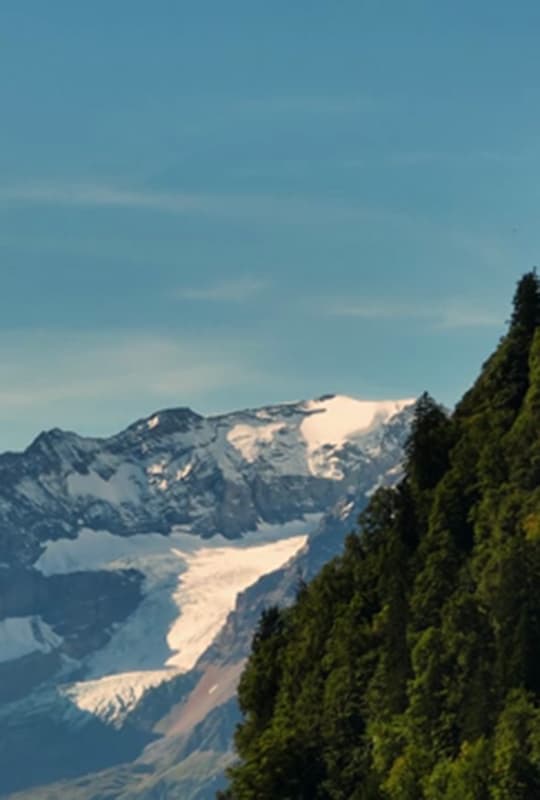
About us

About us

The Swiss Alps are our home, and we invite the world to indulge in our culinary heritage. Find out where we come from and why innovation is so important to us. And get to know the people behind Läderach.

Learn more arrow-right
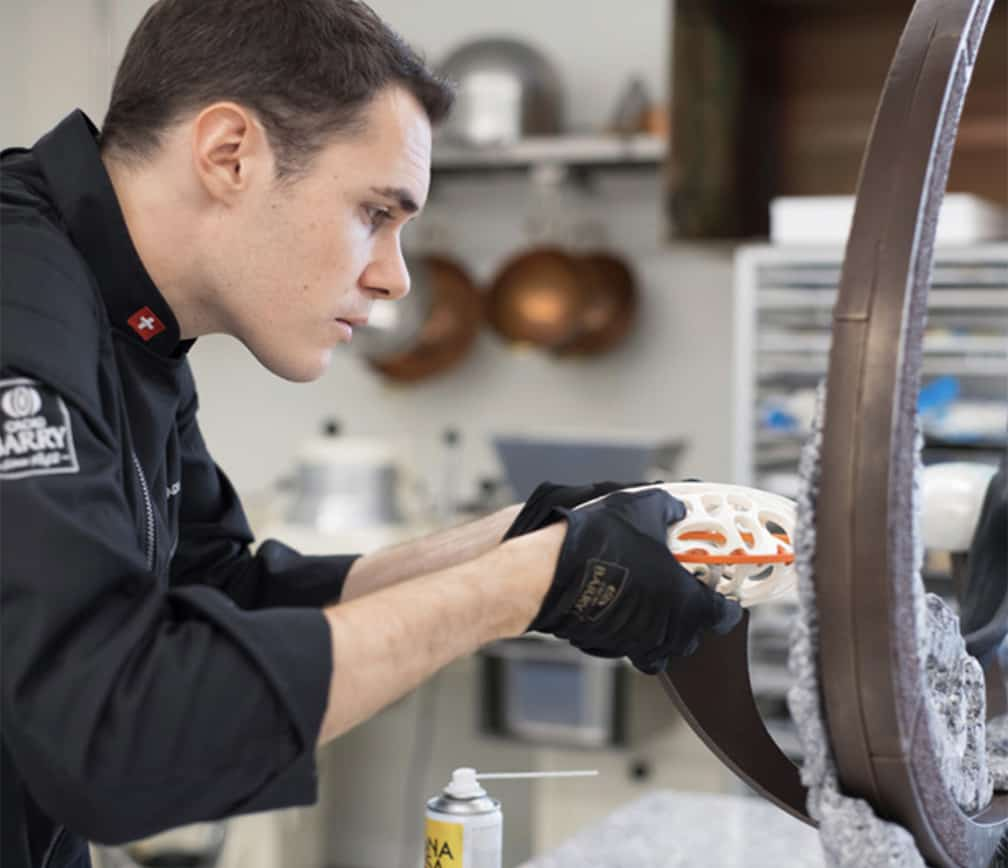
World Chocolate Master

World Chocolate Master

Elias Läderach is the only Swiss chocolatier to have earned the title “World Chocolate Master.” Experience his award-winning creations and find out more about his latest projects.

Learn more arrow-right
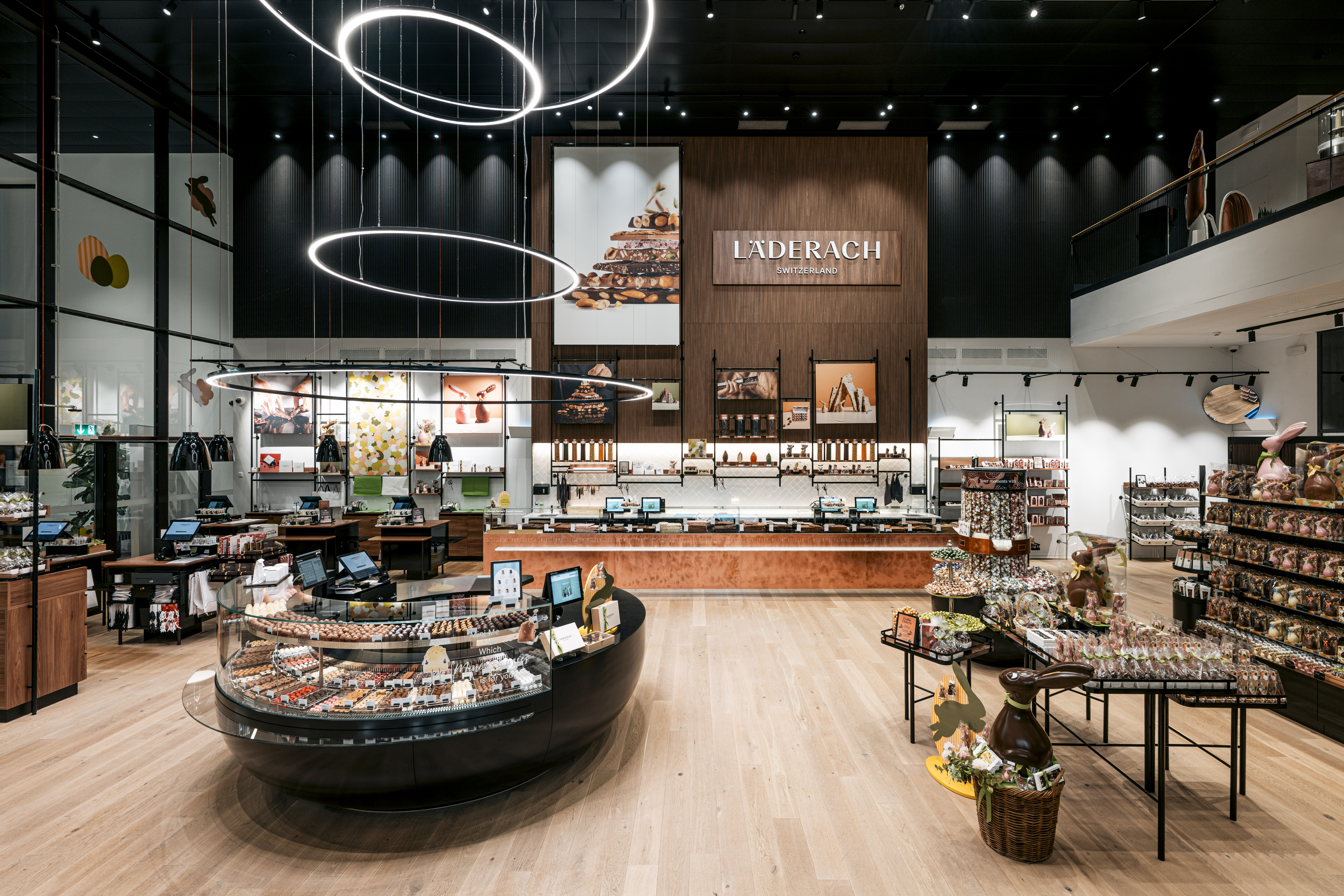
House of Läderach

House of Läderach

A chocolate museum, a chocolate studio, chocolate events – the House of Läderach has it all, including a café, of course!. Discover the delights of freshly made chocolate in all of its facets – 364 days a year.

Visit now arrow-right
Freshness

Freshness

The exquisite taste of our chocolate creations is an affair of the heart for us. That’s why we make them fresh daily and get them to you as quickly as possible – so you can experience the freshness with all your senses.

Learn more arrow-right